
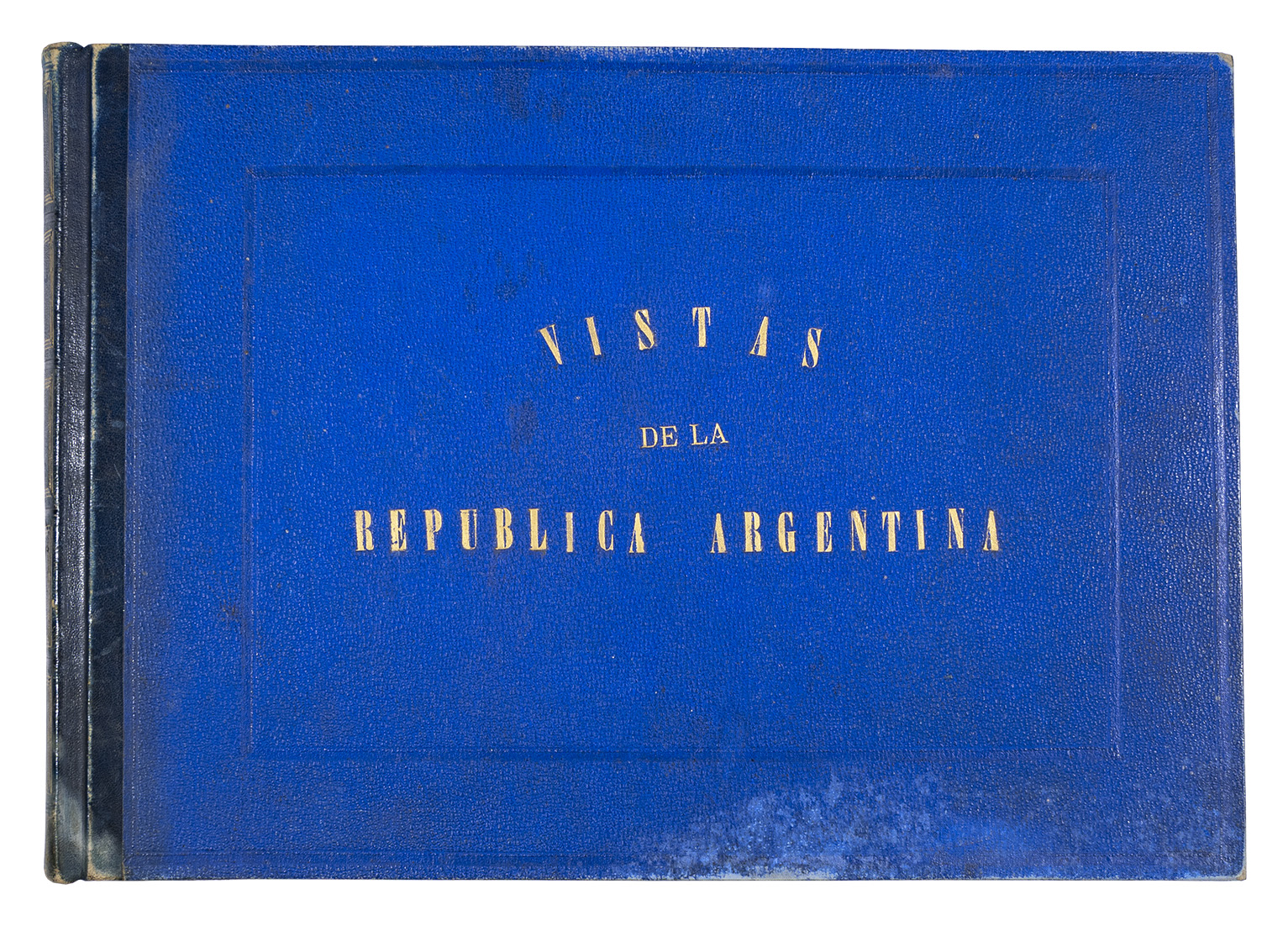
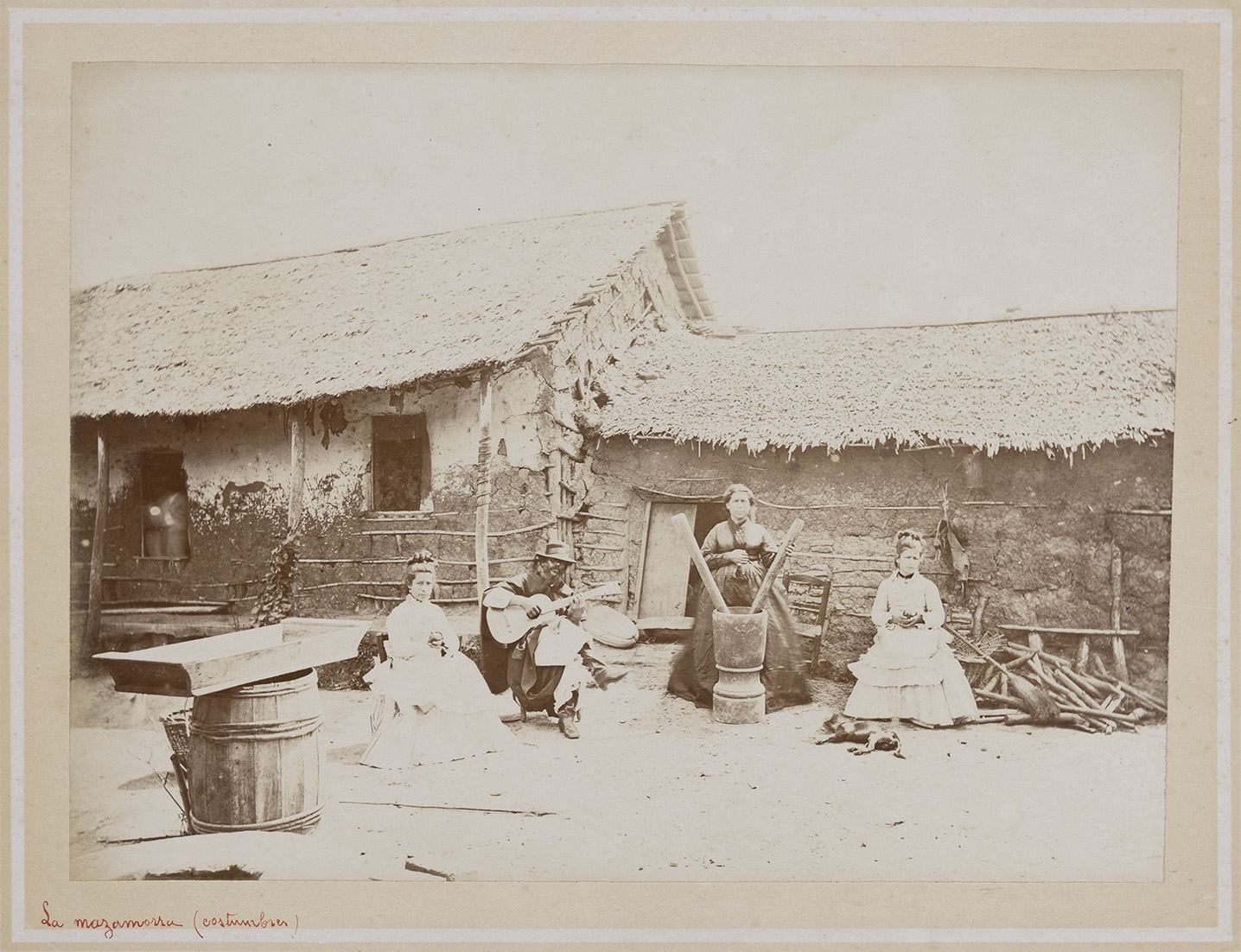
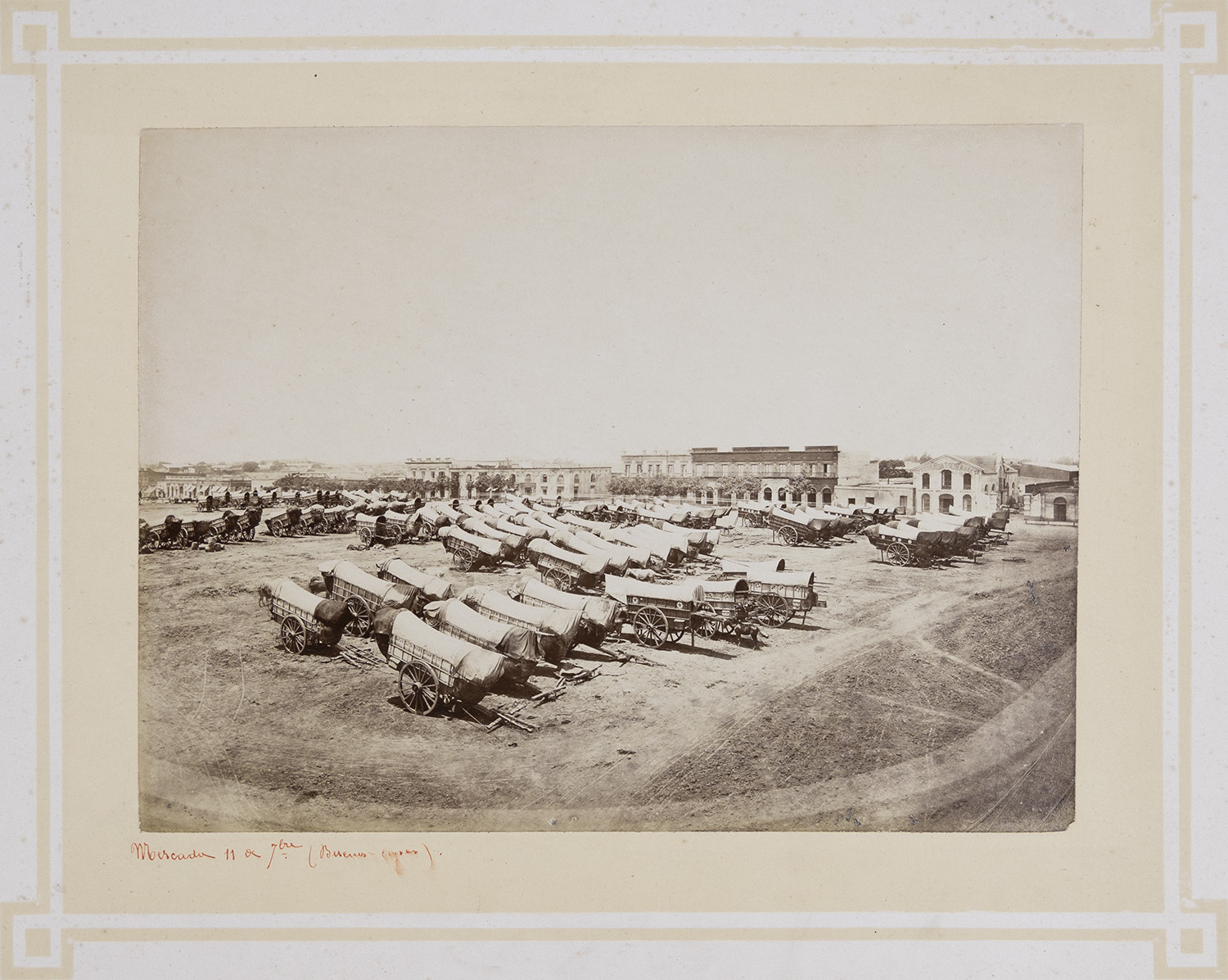
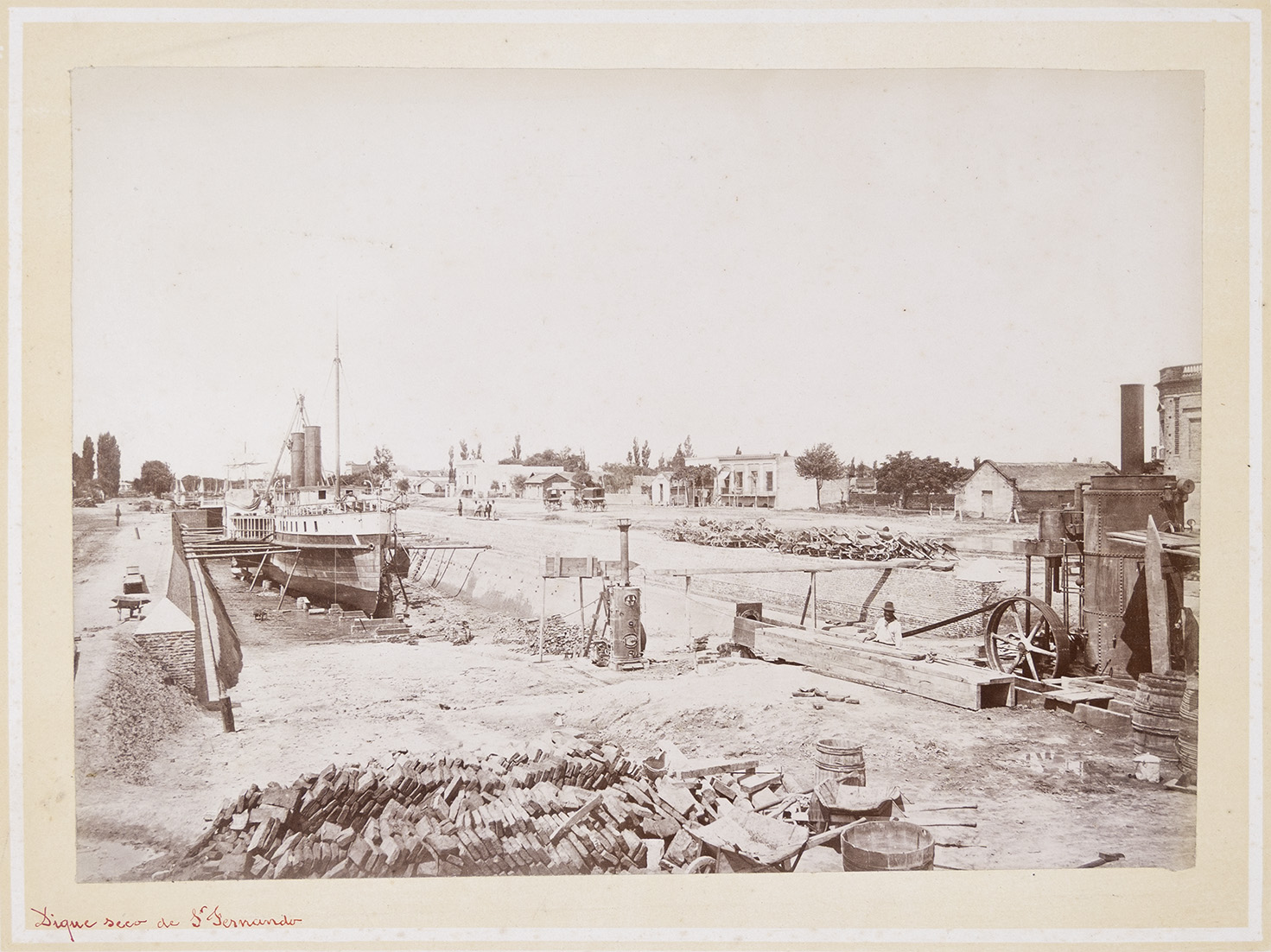
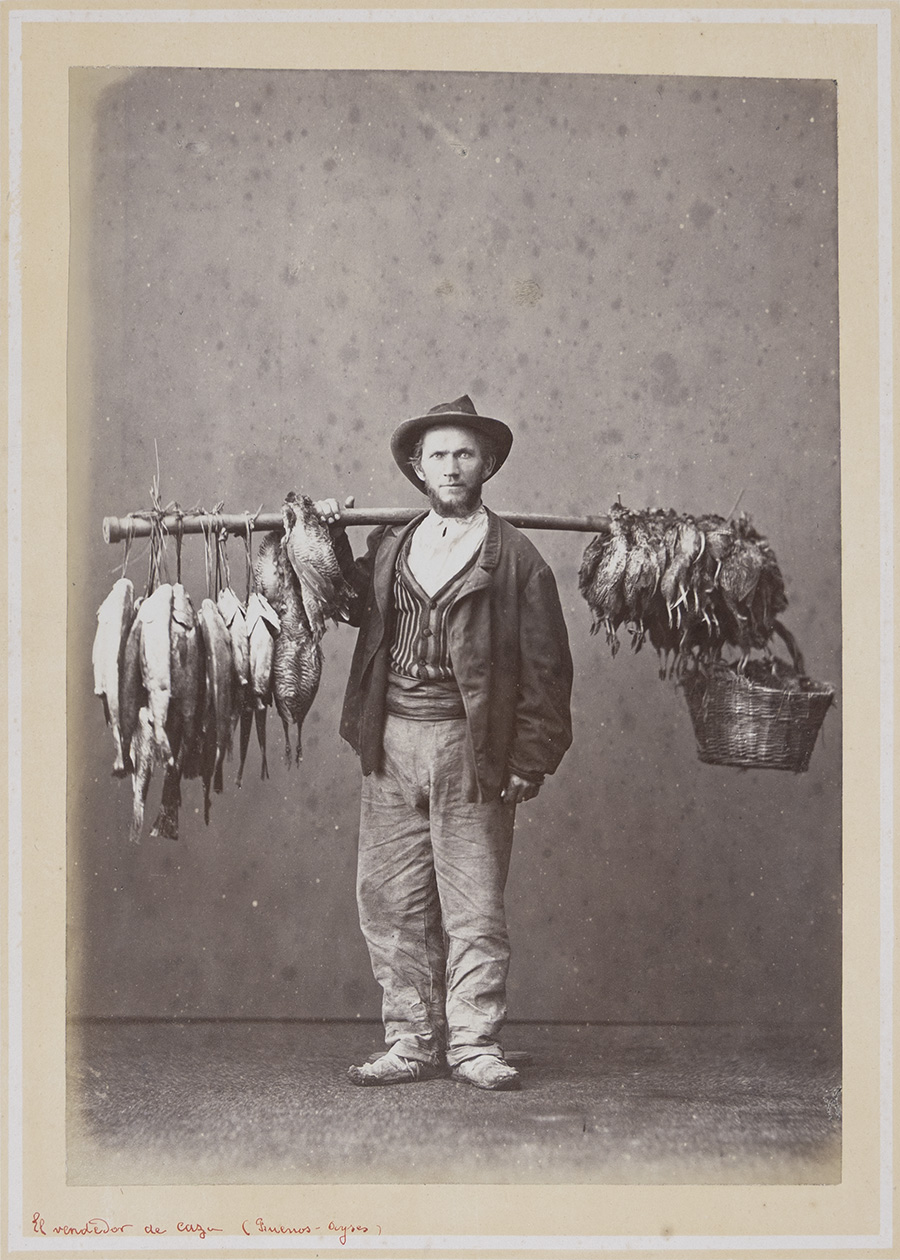

Album “Views of the Argentine Republic”. Circa 1879.
Album with 68 vintage photographs, albumen copies, without captions. Measures. Photographs, around: 18 x 25.4 cm. Album: 29.7 x 42.5 cm. Period binding in blue with gold titles. Nineteenth-century album in perfect condition. Former César Gotta collection.
At a national and international level, the most famous photographer working in Argentina during the second half of the 19th century was, definitively, the Portuguese Christiano Junior, whose artistic signature in all his works was "C. Junior." Books and numerous essays have been published about his life and extensive photographic work in Argentina, Brazil, Uruguay and Portugal, among other countries.
Such a distinction is not capricious because, due to his great artistic talent, intellectual concerns, deep knowledge of various photographic techniques and even an innate ability to promote his works, they placed him at the top of that new profession that astonished the world.
José Christiano de Freitas Henriques Junior was born on the Island of Flores (Azores Archipelago) in the Kingdom of Portugal around the year 1832. The small area of 142 km2 definitely prompted him to emigrate with his family, wife and two children, to the rich Empire of Brazil, governed by the progressive monarch Dom Pedro II and with the advantage of speaking the same language.
In the 1860s he was installed in Rio de Janeiro, exploiting in his central studio on Rua da Quitanda the brand new method of photographic portraits known as "carte-de-visite" that was very popular at the time. From the Rio period, at least two very unique projects are known: the gallery record of poses on elephantiasis patients and a rich collection on African slaves, especially street vendors and craftsmen.
For health reasons - we consider him a hypochondriac - he decided to settle in Argentina, but before the definitive commercial leap, he organized a chain of simultaneous photographic studios in the cities of Rio de Janeiro, Mercedes (Uruguay) and Buenos Aires, locations that he promoted, and very well, on the back of all his works.
Summarizing their activity in our country goes far beyond this report; We will say that his first measure was to open a studio on Florida Street No. 159, a favorite walk of Buenos Aires high society. Here he worked intensively in the field of social portraiture and, in turn, interacted with intellectuals and political leaders. Christiano Junior owes the initiative to portray the presidential inauguration and it begins with Domingo F. Sarmiento posing with his band.
Among his most successful strategies is participation - obviously with his best photographic works - in various exhibitions such as, for example, the National Exhibition of Córdoba (1871) and the Scientific Exhibition of Buenos Aires (1876), obtaining a gold medal in both, and numerous honorary diplomas in other events.
However, his most significant contribution was the publication of two photographic albums. The second, from 1870—titled "Views and Customs of the Argentine Republic – Published by Christiano Junior, Photographer, Florida 208, Buenos Aires, Province of Buenos Aires"—was notable for including a carefully written description for each image, provided in four languages.
The most ambitious undertaking of his career, however, was a monumental project to document the entire known country. He described it as follows: "My plan is vast, and once completed, there will not be a single historic stone or tree in the Argentine Republic—from the Atlantic to the Andes—that has not been captured by the life-giving focus of the camera obscura."
This initiative—unique for its time—came about after he sold his prestigious Buenos Aires photography studio to the Englishman Alejandro Witcomb and embarked on a documentation project that spanned the provinces of Córdoba, Santa Fe, San Luis, San Juan, Mendoza, Santiago del Estero, Catamarca, Tucumán, Salta, and Jujuy.
The present album brings together albumen prints from both collections: those documenting Buenos Aires and its surrounding areas, as well as those from his nationwide project. It should be noted that C. Junior, like any professional, often took multiple shots of a single subject, with slight variations; a case in point is his famous image of the orange vendor, who is shown here standing.
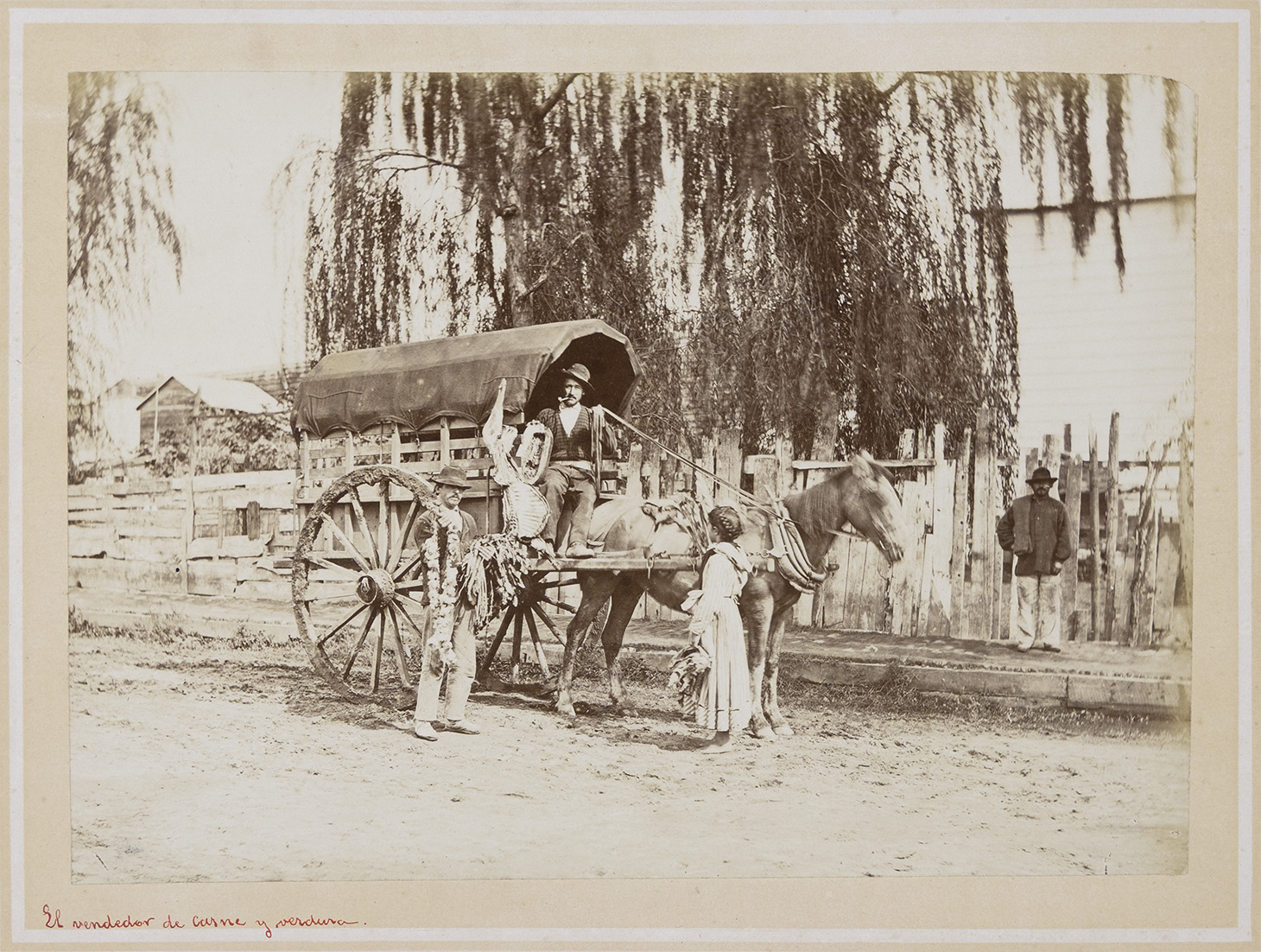
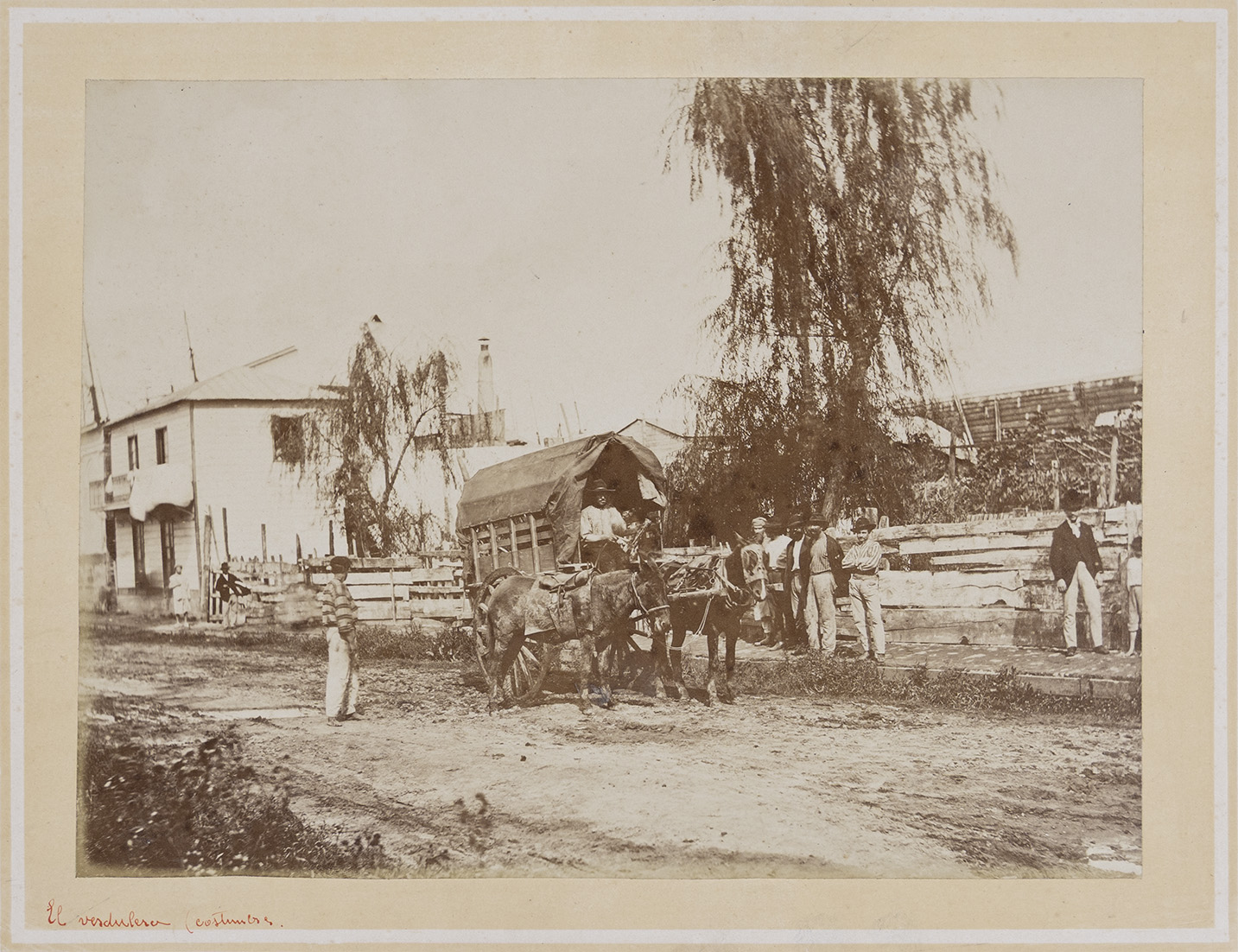
This edition includes both the key views he captured of the capital city, Buenos Aires, and others that have not been previously published. The Portuguese photographer showed a keen interest in "popular types"—everyday figures from the local culture—captured both in the studio and in outdoor settings. Examples from the studio include the aforementioned orange vendor, a seller of poultry and fish, and a *canillita* (newspaper boy), while the outdoor scenes feature street-vending carts laden with fruits and vegetables. Christiano Junior also undertook commissioned work—for instance, documenting the sumptuous Chapel of Santa Felicitas, erected by the wealthy Guerrero family in memory of a beautiful young woman murdered by her suitor. In a similar vein, he also documented the innovative dry dock in San Fernando, producing several protective, wide-ranging shots of the site.
This entire urban survey was made possible by a specialized, horse-drawn laboratory wagon—a mobile darkroom—which bore advertisements for his firm on its sides. Inside, glass plates (measuring 24 x 30 cm) had to be coated with wet collodion to serve as negatives—a process carried out moments before each carefully focused exposure.
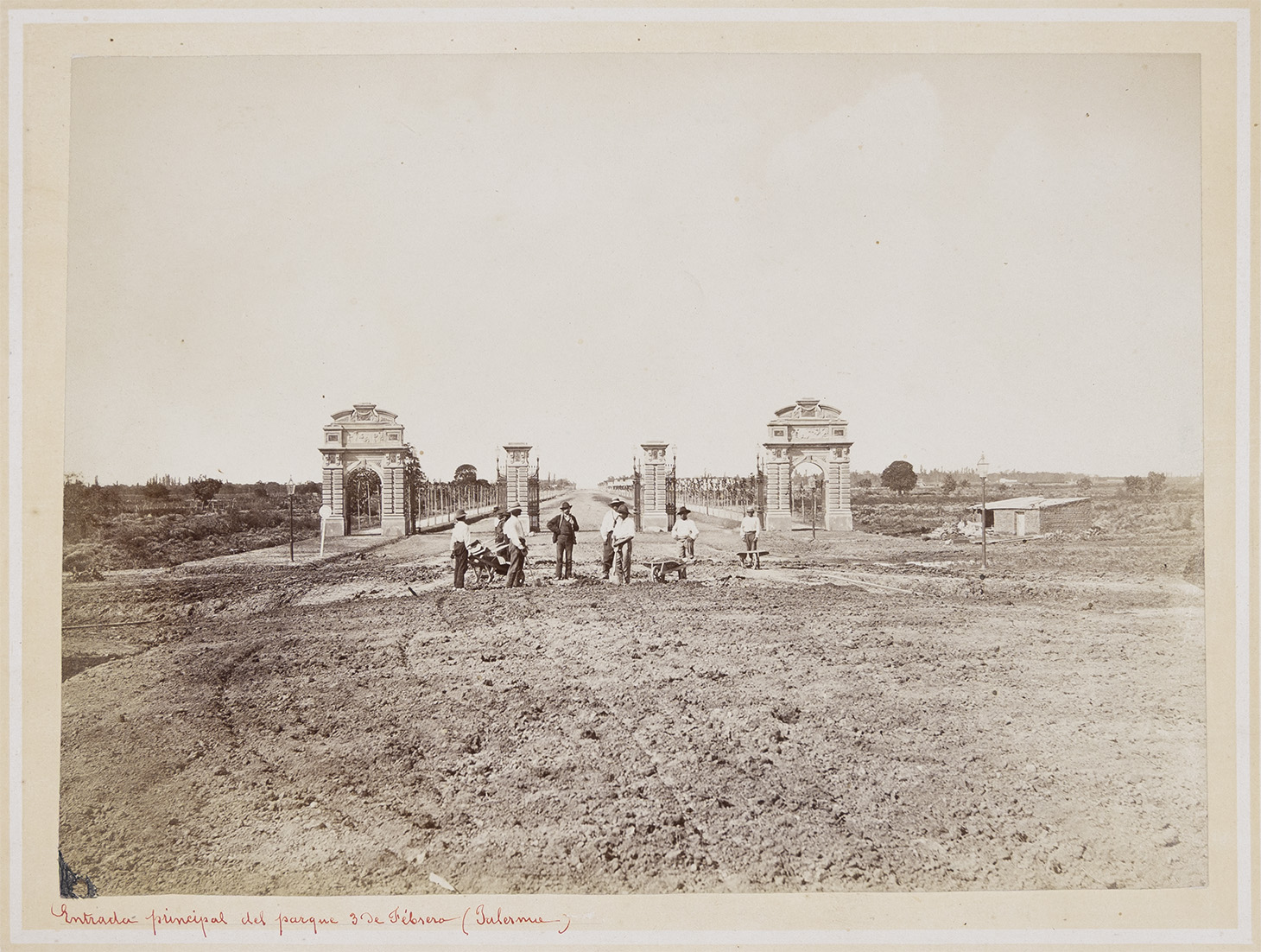
The center of Buenos Aires is well represented, with views of Plaza Victoria, the Government House, the Cathedral, the Cabildo, the Belgrano monument, the Central Station (Aduana Taylor), and more. Traveling in his wagon across the city’s challenging cobblestone streets, he also captured more distant locations, including the docks, washerwomen by the river, La Boca, the church in Belgrano, the Recoleta Cemetery, the "Five Corners" (Cinco Esquinas), the gates of Palermo, Plaza Lorea, Admiral Brown’s estate, and, notably, an extensive series on the grand residence (*Caserón*) of Juan Manuel de Rosas.
He employed a clever strategy, capturing elevated perspectives by positioning his camera at high vantage points—often with the help of an assistant, such as his son, José Virginio de Freitas Henriques. At times, he placed people in the foreground of these buildings, perhaps as part of a collection of stereoscopic views—though such a collection has yet to be discovered.
Christiano Junior passed away in 1902 in Asunción, Paraguay, where he had moved for health reasons. His vast photographic legacy is preserved today in public and private museums, photographic archives, and private collections across Argentina, Brazil, and other countries. Here is an exceptional album.
Abel Alexander
President of the Ibero-American Society for the History of Photography
| AUTHOR | CHRISTIANO JUNIOR |
|---|---|
| ITEM | 5 |
| PRICE | U$S 20.000 |
Are you interested in selling some works?
Send us an email briefly indicating
which works you intend to put on sale, and we will respond. click here
Subscribe to our newsletter to be updated.
Check our Newsletters