



“Buenos Aires and La Plata” album. Circa 1884.
A 19th-century photographic album: 24 albumen prints—vintage, sepia-toned works. Bound in green, embossed hard covers, with gold-lettered titles and endpapers. Dimensions: photographs approximately 16.8 x 21.5 cm. Features an oval ownership stamp: "Ernesto Ellerhorst - Reconquista 336 - Buenos Aires - Public Accountant." The album’s cardstock pages and the photographs show signs of foxing. Formerly in the collection of César Gotta.
The Anglo-Argentine photographer Samuel Boote (1844–1921) is a legendary figure among the pioneers of this new art form in Argentina. Together with his younger brother, Arturo Wood Boote (1861–1936), they were the most prolific creators and publishers of 19th-century photographic albums documenting Argentina’s urban and rural landscapes. The historical significance of both men is aptly captured in a book published by the Fundación Antorchas (2011) titled *La Argentina a fines del siglo XIX - Fotografías de Samuel y Arturo Boote - 1880 - 1900* ("Argentina at the End of the 19th Century: Photographs by Samuel and Arturo Boote, 1880–1900"), featuring texts by researchers Abel Alexander and Luis Priamo.
It should be noted, regarding this substantial heritage collection, that the majority of these images were captured by Samuel Boote; while Arturo also produced his own work, he frequently utilized his older brother’s photographs for active sale and distribution, both within Argentina and internationally. Today, the photographs of Samuel and Arturo Boote are held in major museums and photographic archives around the world.
As astute photographic entrepreneurs, they bypassed the most common business model of the trade—portraiture—and focused entirely on publishing views of urban and rural settings, including *estancias* (ranches), industrial facilities, and even opulent country estates. This album focuses on documenting two Argentine capital cities, each with very different characteristics: Buenos Aires—founded by the Spanish 300 years earlier—and the brand-new city of La Plata, the ambitious capital of our largest, most populous, and wealthiest province, which was built just a few years before these images were captured.
Following the Revolution of 1880—which saw the city of Buenos Aires become the national capital—a debate emerged regarding the location for the new provincial capital. Options included relocating the seat of the provincial government to an existing city (such as Luján, Mercedes, or Chivilcoy) or building an entirely new capital for the province of Buenos Aires from the ground up. The latter path was chosen, resulting in an architectural feat.
Governor Dardo Rocha, who spearheaded this endeavor, commissioned a photographic record from a former comrade-in-arms, the photographer Tomás Bradley. Bradley’s work was magnificent, documenting the city’s development from the laying of the cornerstone to its full operation. Shortly thereafter, Samuel Boote followed in his footsteps; traveling by horse-drawn carriage, he trained his large wooden camera on key government buildings—such as the Government House and the Legislature—as well as the iconic Church of San Ponciano, the governor’s striking four-story residence, and, of course, various panoramic views of the city.
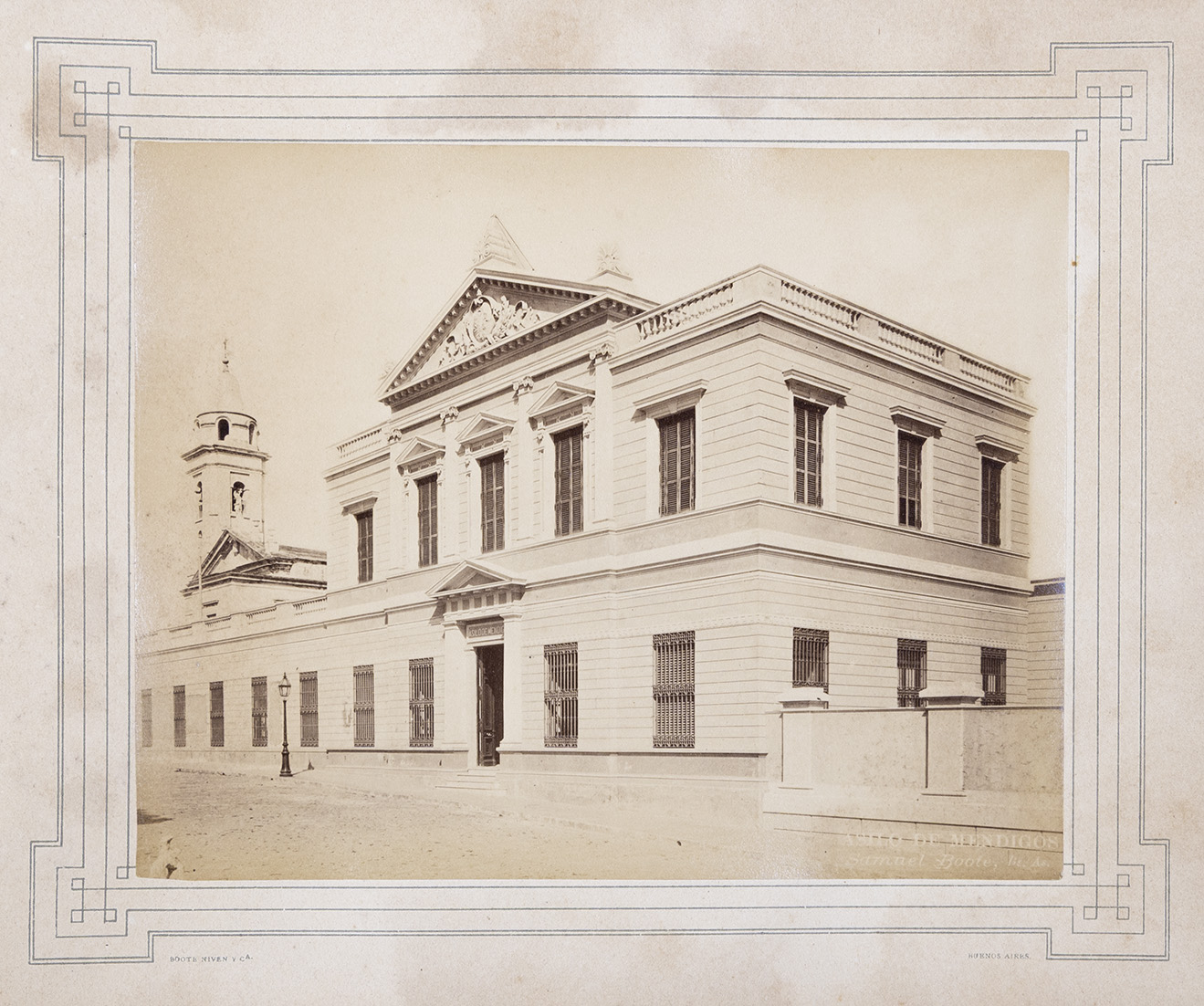
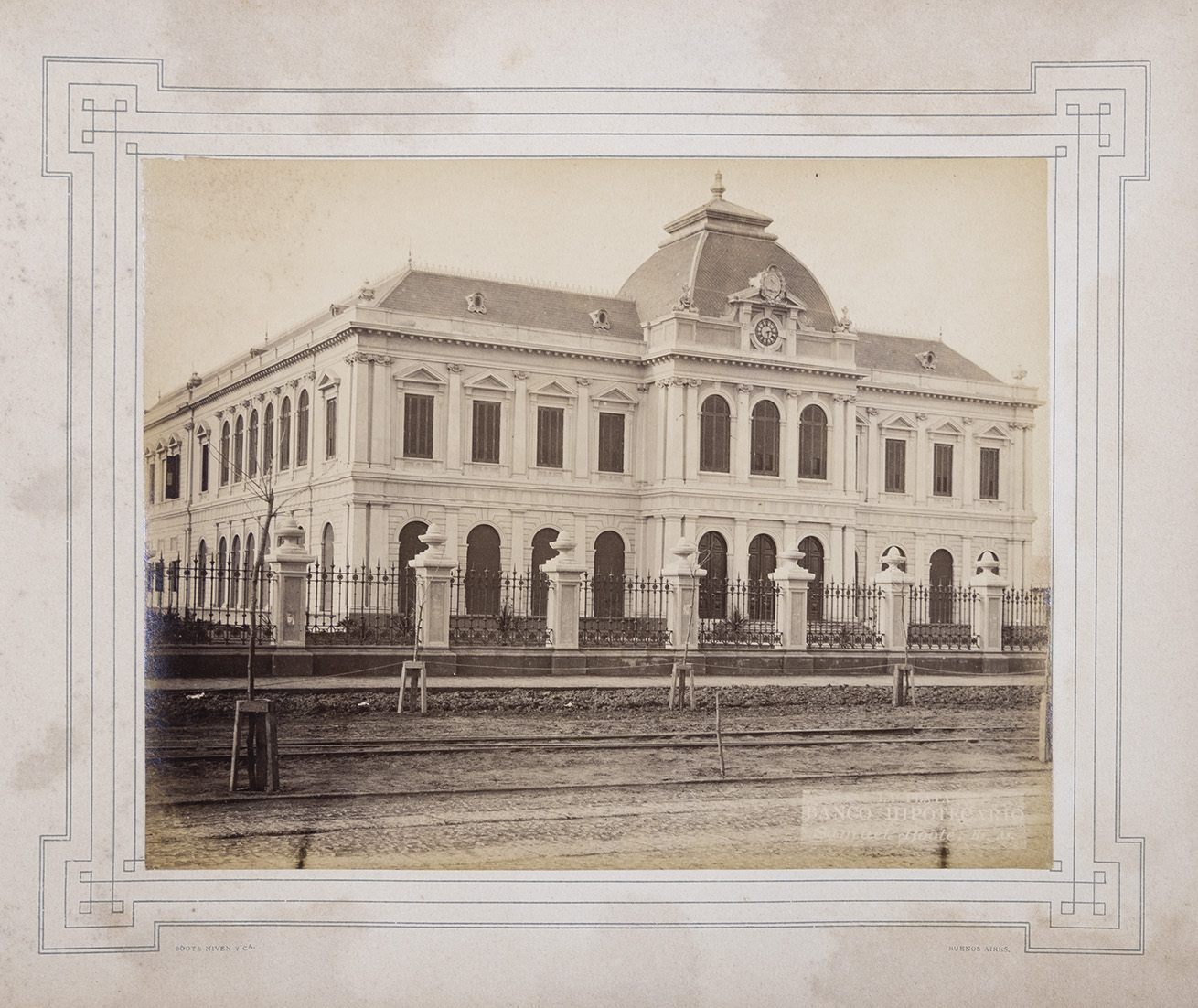
Regarding the city of Buenos Aires, this album highlights photographs of the Stock Exchange, the Banco de la Provincia (both its exterior and interior), Plaza Once, the gates of Palermo—at the innovative Parque Tres de Febrero—the passenger pier, the Church of Santa Felicitas, the National Penitentiary, and other notable landmarks of the city.
It is also worth noting that, reflecting the period when the firm supplied photographic materials, all the secondary mounts in this album consist of white cardstock featuring artistic borders, with the signature "Boote, Niven & Ca. - Buenos Aires" printed along the bottom edge. In a clever way of highlighting the authorship of his work, this photographer-entrepreneur would mark his negatives with the inscription "Samuel Boote - Bs. As."—sometimes even including a description of the scene using this same method.
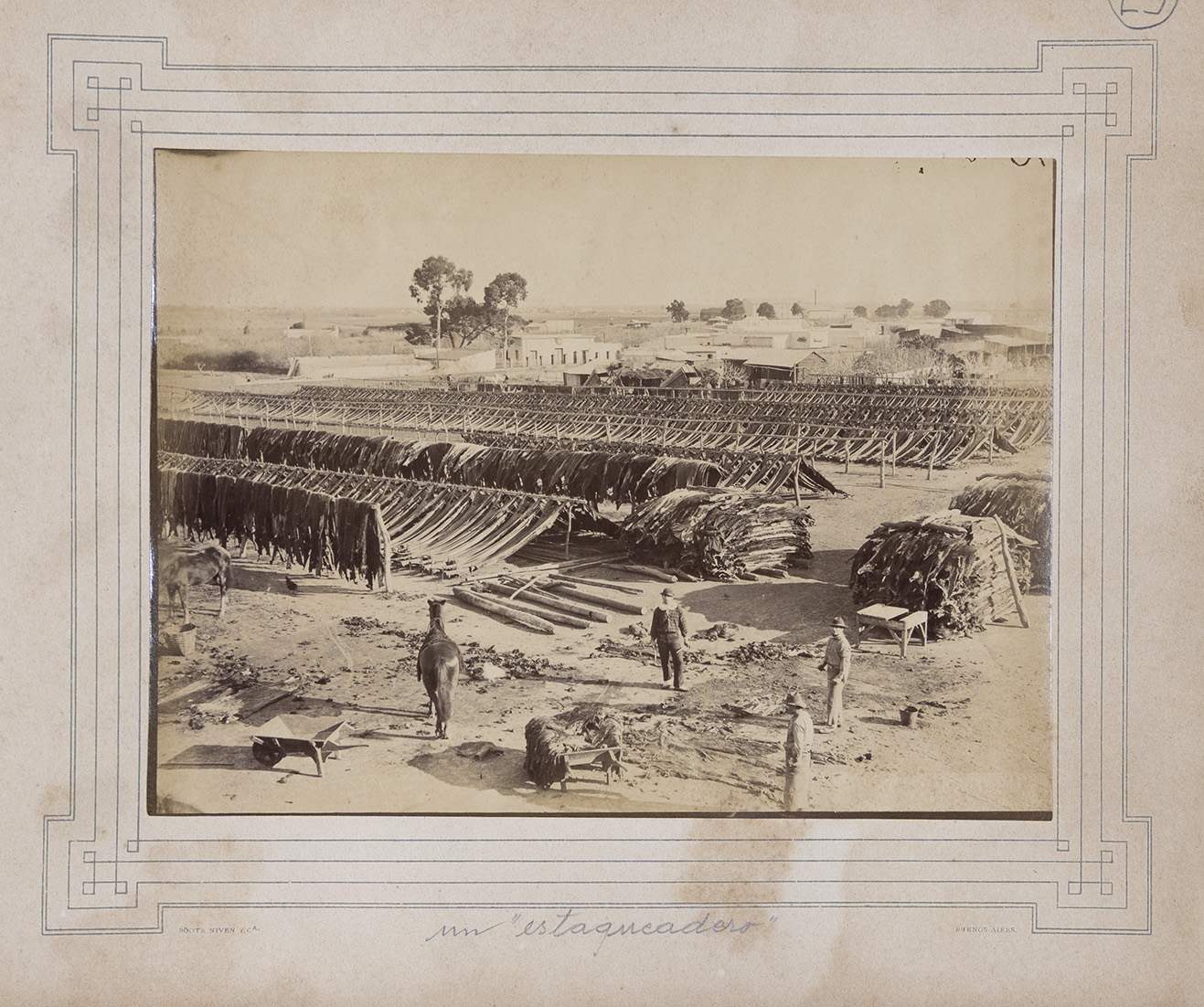
Expanding the thematic scope in an interesting way, two of the photographs relate to rural life. One—labeled in pencil as "Un estancadero" (a ranch/hides-processing site)—shows hundreds of cattle hides drying in the sun; it is a vital example of the rural production that transformed Argentina into a global power. The other depicts a passenger stagecoach fording a stream, pulled by several horses—a vivid illustration of a mode of transport that would soon be superseded by the advent of modern railways.
This is, in every sense, an album that serves as a testament to the final decades of the 19th century.
Abel Alexander
President, Ibero-American Society for the History of Photography
| AUTHOR | SAMUEL BOOTE |
|---|---|
| ITEM | 6 |
| PRICE | U$S 6.000 |
Are you interested in selling some works?
Send us an email briefly indicating
which works you intend to put on sale, and we will respond. click here
Subscribe to our newsletter to be updated.
Check our Newsletters