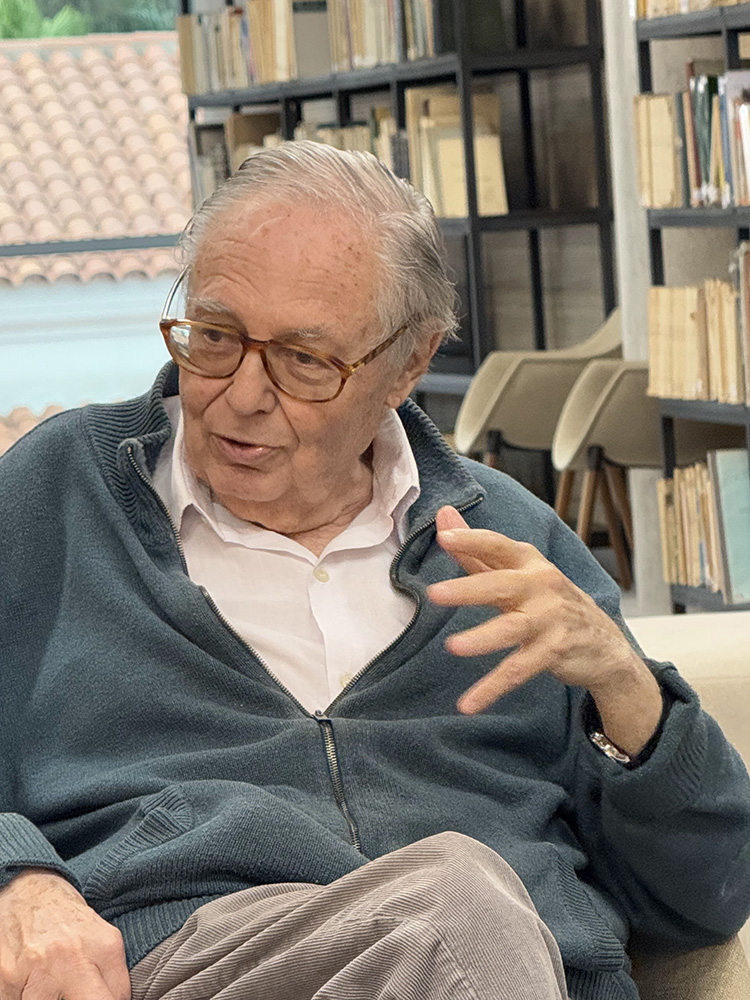
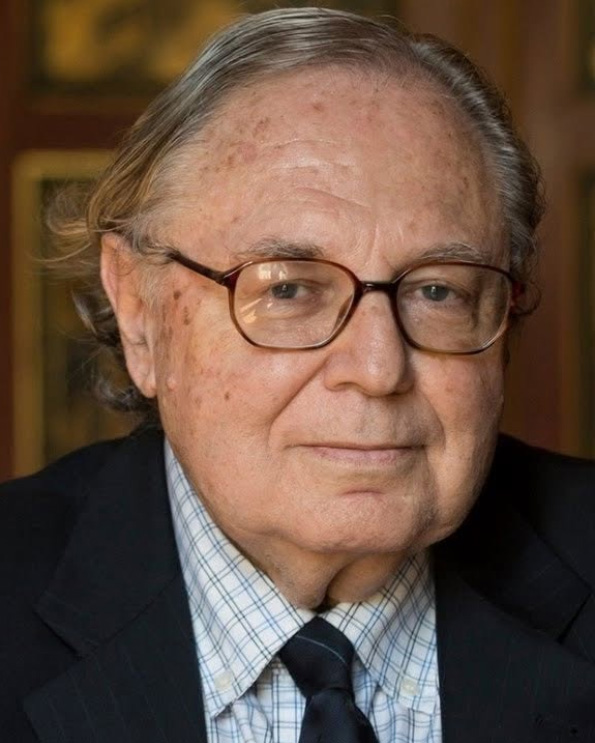
It was just another day, a full schedule, each task carried out as usual, until a phone message turned everything upside down: "Ramón has passed away," a mutual friend texted me on WhatsApp, and time stood still.
An architect like his wife, Graciela Viñuales, they developed a shared life project that took them through the history of the discipline and its heritage throughout Latin America, and much more. Together, they shaped a family built on three pillars: their sons Martín, Rodrigo, and Alejo. And together, they built an institution that is a beacon for the entire region, CEDODAL [Center for Documentation of Latin American Architecture].
Before that, they had left their hometown of Buenos Aires, as a result of the tragic "Night of the Long Batons," and settled in Resistencia, the capital of the Chaco province, where they dedicated themselves to teaching at the Faculty of Architecture and Urbanism, part of the National University of the Northeast [FAU - UNNE]. There, he began the publications that today define his stature among his peers: more than three hundred titles and a thousand articles bear his signature. There is no way to study the architectural heritage and its history in such a vast geographical and cultural space without reading some of his texts.
As I write these lines, and without intending to make comparisons, I think of another pillar of Latin American cultural history, the Jesuit priest Guillermo Furlong [1889-1974], also with an astonishing body of published work. I always regretted not having met Furlong, and today I am proud to have been Gutiérrez's friend.
With Ramón, we forged a relationship that I always experienced as a friendship, and which today, in retrospect, I see as that of teacher and student. He had that gift, the ability to teach without being noticed, and I say this without being an architect. Our focus was on cultural heritage…
Back in late 2020, he confided in me about a crazy idea: publishing a digital magazine. His voice proved inspiring. I shared the dream with Ramón, and with his encouragement—he wrote an article in the first issue of Hilario—we made it this far, always with a message, a gesture, a collaboration, or a recommendation from him.
Furthermore, as the newly appointed president of the Association of Antiquarian Booksellers [ALADA], a position I held for four years [2021-2025], he joined us in the defense of cultural heritage. Ramón had spearheaded bold actions against the illicit trafficking of cultural property, and simultaneously, he fervently defended the fair trade of art and antiques, promoting strategic alliances between private collectors, intermediary organizations, and the government. We worked diligently toward that ideal. Over time, we cultivated a practice that we upheld until his final days. We exchanged emails about various initiatives and met in a café to refine those ideas. We were united by that shared commitment and a similar taste—to put it humorously now, a preference for pastries with quince paste…
He was a true friend of antiquarian booksellers [1]. As an anecdote—just one more—I remember visiting the Antigua Librería Madero in Mexico City, and its founder, Enrique Fuentes, upon recognizing my nationality, immediately said, “I have a great Argentine friend, Ramón Gutiérrez, an excellent bibliophile and researcher.” Ramón would visit every bookstore he came across on his travels, and that's how he built the CEDODAL library, a good part of which has now been donated to the Library of the National Congress, as two of its directors mention in this same installment of Hilario's work.
We have just received CEDODAL Bulletin number 107, and the voice of his wife and colleague, Graciela Viñuales, offers us a glimmer of hope, even as we griev for his loss: “The sadness of those hours was partly offset by the outpouring of support that reached us from all over Latin America and even from more distant countries. Furthermore, family, colleagues, and friends attended his funeral services. This widespread support helps us strengthen our work at CEDODAL and encourages us to continue building on what Ramón and I had been doing: books in progress, participation in seminars, organization of documents, and support for new researchers. The team’s work will continue, as we envisioned when we founded this Center, believing that the important thing was for the initial momentum to expand and for the themes of Latin American architecture to continue to be explored in greater depth and connected to its history, its territory, and its exchanges with the Iberian world.”
Dear Ramón, thank you for so many lessons, tips, and so much support!
Note:
1] Ramón Gutiérrez was the guest speaker at the Sixth Buenos Aires Antiquarian Book Fair in 2010, where, referring to the bookseller, he stated: “That bookseller, who is much more than a merchant, is the indispensable support in those uncertain adventures of historical research. He is the companion who encourages and supports, the one who asks the intelligent questions that sometimes your own colleagues fail to formulate. These are the booksellers who give you information about new releases but also about what has gone unnoticed. They are the ones who practice friendship like a sport and are capable of understanding everything from your intellectual limitations to your economic hardships [...]”