A New Cultural Heritage
The history of the great international museums and collections dedicated to Fine Arts and other decorative arts deserves a considerable chapter, which obviously exceeds the scope of this work.
During the 18th and 19th centuries, the reigning houses of Europe generated an astonishing cultural heritage, which culminated in the inauguration of institutions of enormous prestige. We can mention some examples such as the Hermitage Museum in Saint Petersburg [1764]—thanks to the efforts of Catherine the Great—the Louvre Museum in Paris [1795], the Prado Museum in Madrid, and, around 1824, the National Gallery in London. In parallel, wealthy aristocrats of those times amassed exotic collections that were known at the time as wunderkammer, a German word referring to a cabinet of curiosities.
These concentrations of diverse treasures, including works of art by great masters of all eras, made them accessible to the general public, as well as to artists of each period, art historians, and critics. Among these works, we highlight that paintings executed in oil, watercolor, or ink, drawings, prints, and all types of three-dimensional works—we will focus on these to approach the topic of interest in this article—then gained the aesthetic appreciation of broad segments of the population.
In Argentina, this phenomenon was replicated through the creation of emblematic museums such as the National Museum of Fine Arts [1896], the National Museum of Decorative Arts [1937], and the Museum of Modern Art of Buenos Aires [1956], to mention just a few of these institutions.
Photography Emerges: Its Collecting
After arduous efforts by several European scientific researchers, the new marvel of the 19th century emerged: the astonishing art of photography. Its first examples were the Daguerreotype by Niépce and Daguerre [France, 1839] and the Calotype by Talbot [England, 1840]. This technical and artistic innovation spread rapidly throughout the world, reaching Montevideo in February 1840. It was unable to reach Buenos Aires due to the French naval blockade of its ports. Daguerreotypists began working here in 1843 and, without pause, moved their equipment to various cities in the interior of the country.
This brand-new photographic art—highly debated from its inception—also found its way into the collections of museums, archives, and private collections worldwide through bequests, donations, and purchases, both public and private.
Recapping the history of photography in Argentina, we can highlight some key institutions that stood out for their pioneering incorporation of photographic materials into their heritage collections.
First and foremost is the National Historical Museum—ultimately located in Lezama Park—thanks to the efforts of its great champion, the historian and collector Adolfo P. Carranza, who amassed a collection of more than 120 daguerreotypes and ambrotypes—including the famous portrait of General San Martín—as well as early albumen photographs. This leading institution is complemented by the important daguerreotype collections of the Mitre, Sarmiento, and Saavedra museums in Buenos Aires, and, in the province of Buenos Aires, the Enrique Udaondo Provincial Museum Complex in Luján, and the Pampean Museum in Chascomús.
Following this order, we must mention the country's largest photographic repository, the General Archive of the Nation (AGN), comprised of over one million photographs from the 19th and 20th centuries. These include works from the Argentine Amateur Photographic Society (SFAA), the Casa Witcomb collection, the photographic archive of the magazine Caras y Caretas (1898-1939), and, among other sources, the Undersecretariat of Public Information.
Among the major national archives, the Center for Documentation and Research on Public Architecture (CeDIAP) stands out, with holdings from the Ministry of Public Works (MOP) and other agencies totaling more than 300,000 photographs from the last century.
An essential reference point in this field is the "Benito Panunzi" Photo Library at the Mariano Moreno National Library (BNMM), which stands out not only for its photographic holdings but also for possessing the most complete photographic library in the country.
The gradual formation of such a large heritage collection spurred the study of its undeniable iconographic richness, giving rise to a new discipline that continues its academic development today. In the early 1980s, the Center for Research on Early Photography in Argentina (CIFAA) was created, a pioneering group that would fuel subsequent initiatives, including the Antorchas Foundation with its program of assistance to photographic archives, directed by historian Luis Priamo, and especially the Congresses on the History of Photography (1840-1940), which, initiated in 1992, have resulted in a series of twelve published proceedings comprising more than 500 research papers.
The heritage dissemination efforts of the aforementioned pioneering organizations rapidly drew attention to these visual treasures. This led to the emergence of various photographic museums, including the Humberto F. Zappa Museum (FAF) and the Simik Photographic Museum, both in Buenos Aires, the Quilmes Municipal Photographic Museum, and the Dionisi Palace Provincial Photography Museum (Córdoba), in addition to private collections, photo libraries, and other entities dedicated to vintage photography.
Initially, it was a tiny photographic collecting scene—this was the pre-internet era—that circulated within a small circuit of antique shops, especially the Sunday market in Plaza Dorrego in San Telmo. From the early 1980s, along with Sameer Makarius, Aldo Sessa, Miguel Ángel Cuarterolo, and Juan Gómez, I was among the first collectors who frequented that old neighborhood. At that time there was a small photographic shop -almost secret- run by the friendly Mrs. Gochechea in a gallery near the Opera Cinema on Corrientes Avenue, in the heart of Buenos Aires.
Photographic Donations
The French politician Jean Monnet is credited with the phrase, "Men pass away, institutions remain," an undeniable truth to which we add our own modest thought: "Vocations are absolutely non-transferable." These two concepts intertwine and complement each other in a little-studied topic: photographic donations in Argentina. Today, we highlight two examples that mark significant milestones: the photographic historian Luis Priamo and the collector and researcher Héctor Pezzimenti.
We consider the first donation at the national level to be the arrival, around 1860, of the photographic album "Recuerdos de Buenos Ayres" (Memories of Buenos Aires) by the Frenchman Esteban Gonnet, containing 20 albumen prints, at the then Public Library of Buenos Aires—at that time located in the Manzana de las Luces (Block of Enlightenment). Shortly after joining the "Benito Panunzi" Photo Library at the National Library [where I worked between 2006 and 2018], we were surprised to discover that, more than 146 years later, the Argentine State was still jealously guarding this unique collection of heritage.
The second donation came from the descendants of prominent public figures through the delivery of those revered family portraits executed using the daguerreotype or ambrotype process [1843-1865] and early photographs on paper, initially albumen prints [1860-1890], destined for the National Historical Museum [Buenos Aires] and the "Enrique Udaondo" Provincial Museum Complex, located in the city of Luján.
The first specific donation from a photographic collector to a public institution was made by Dr. Julio Felipe Riobó [1883-1966]. After pioneering work as a photographic historian, he donated a large part of his collection of daguerreotypes and ambrotypes to the Museo Pampeano in his hometown of Chascomús. He also donated the most important works in his collection to the National Historical Museum, including the first documented daguerreotype in the country, the portrait of the governor of Salta, Don Miguel Otero, taken in 1845 by the American John A. Bennett.
Since then, donations to public entities have multiplied, driven, of course, by a greater awareness of cultural heritage. For example, we recall the donation of her valuable collection of national and international artistic photographs to the National Museum of Fine Arts by the renowned photographer Sara Facio [1932-2024].
Héctor Luis Pezzimenti
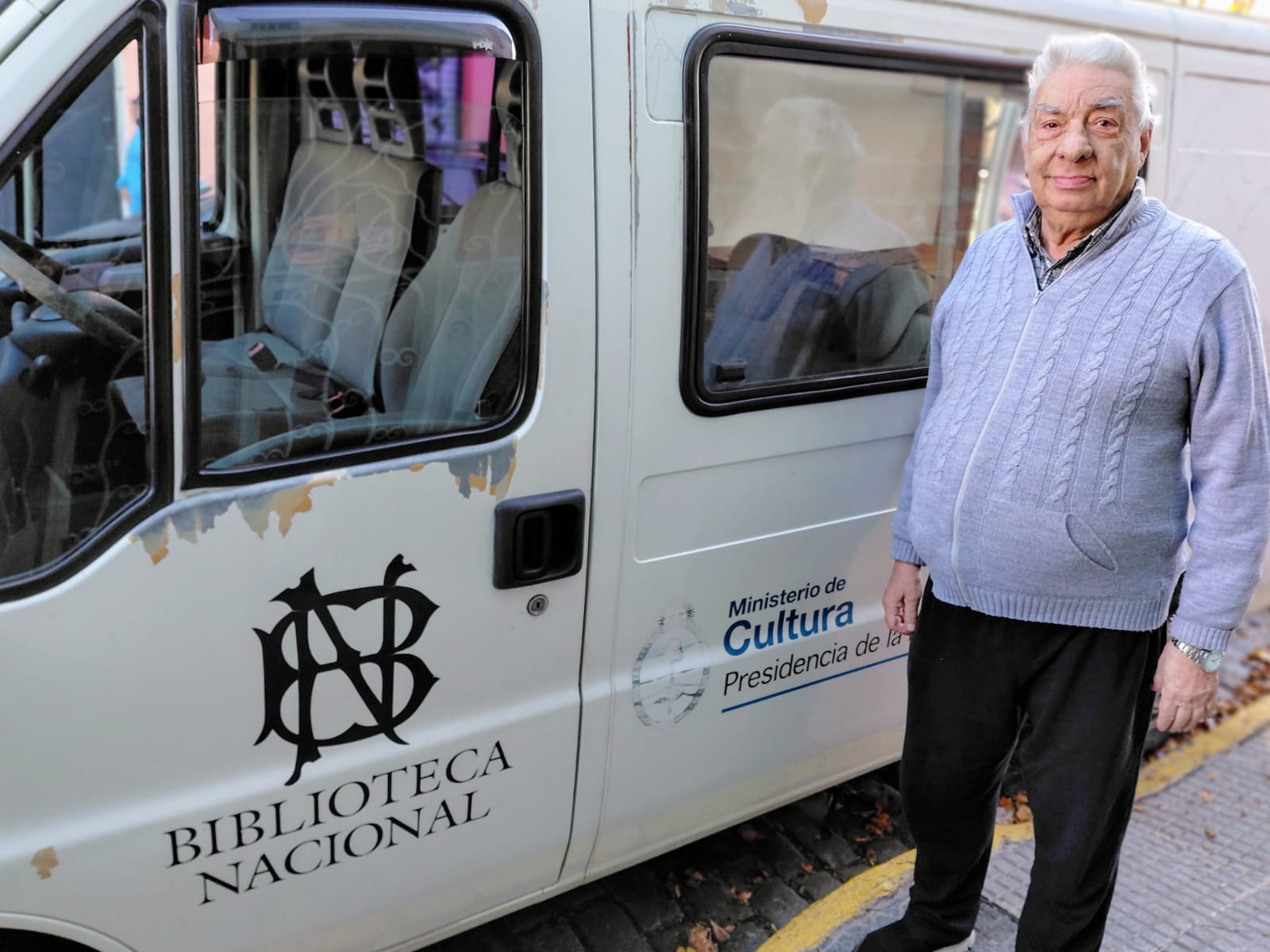
In April 2026, the "Benito Panunzi" Photo Library at the "Mariano Moreno" National Library received a donation of the photographic collection of Argentine collector and researcher Héctor Luis Pezzimenti, founder of CEITPA [Center for Studies and Research on Postcards and Photography in Argentina].
This first donation was received by the head of the Photo Library, Noelia Perales, and as of this writing, the process of incorporating the collection is underway. At the time of writing, 27,295 items have already been cataloged, including 468 albums with varying numbers of photographs each. The inventory is ongoing. The collection comprises thousands upon thousands of photographs spanning from the 1860s to 2016. The material is in good condition.
After decades of active collecting, the Pezzimenti Collection now showcases vintage works from the early stages of Spanish photography, such as the popular carte-de-visite, as well as subsequent universal formats: Portrait Cabinet, Boudoir, Panel, Imperial, Victoria, and Mignon.
The largest period in the collection spans from 1860 to 1930 and, in addition to a predominance of posed studio portraits by major photographic firms, includes urban and rural views, period albums, and delicate portraits created using the timeless porcelain technique. A separate section is dedicated to the surprising amateur stereoscopic photography. The collection also includes examples of photojournalism.
Francisco Ortiz, a cataloging librarian at the National Library of Argentina (BNMM) – who works on the Pezzimenti Collection alongside Guillermo Ziliotto – specializes in the digitization and conservation of photographic material. He informs us about a significant volume of vintage works, including military, educational, architectural, social, political, rural, and geographical photographs, among others. In short, a vast world of vintage sepia and black-and-white images to be classified and preserved, thanks to the efficient technical team at the Photo Library dedicated to this arduous task. These previously unpublished materials will then be made available digitally for researchers and the general public.
We should also point out that the Photo Library's comprehensive Photographic Library offers free and open access – Monday through Friday, from 10:00 a.m. to 6:00 p.m. – to all titles published by CEITPA on the history of Argentine postcards and photography.
Luis Priamo
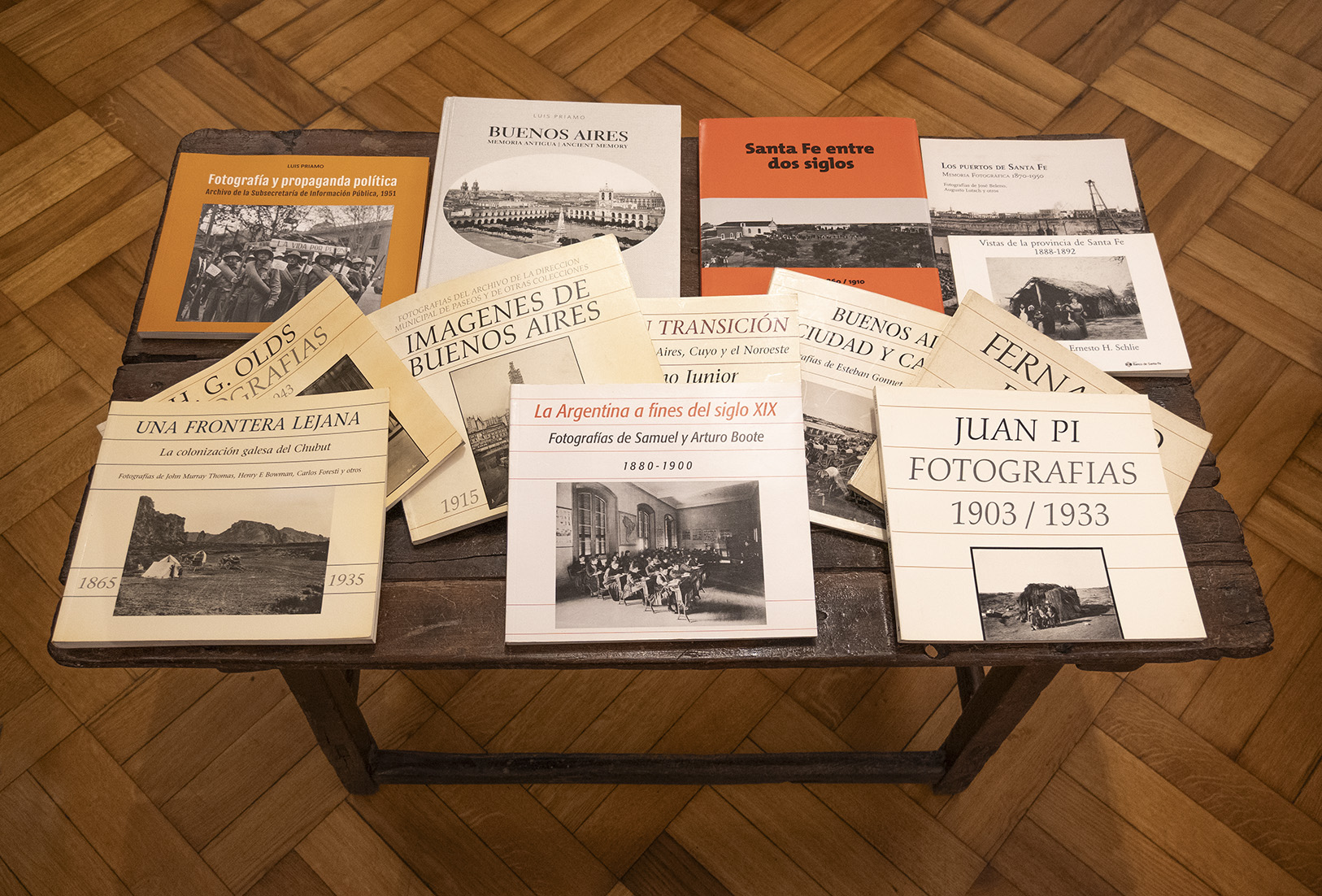
As we have mentioned, the history of photography in Argentina is a discipline that has only recently reached its fiftieth year, and among its most prominent pioneers is the vast body of work by historian Luis Priamo—born in the town of Franck (Santa Fe Province) in 1941—through numerous books, essays, articles, and exhibitions dedicated especially to the first century of Argentine photography.
For this remarkable career, the National Academy of Fine Arts distinguished him as a Full Member and entrusted him with its photographic collections, among which the work of Dr. Francisco Ayerza, one of the founders of the Argentine Amateur Photographic Society (SFAA), stands out.
Luis Priamo's recent decision to donate his personal photographic archive—comprising decades of research—to the Espigas Center for Studies, created in 2017 through an agreement between the National University of San Martín (UNSAM) and the Espigas Foundation, is truly auspicious news.
We believe that the description and nature of this key donation, detailed below by Dr. Verónica Tell—to whom we are grateful—accurately illustrates its contents: “Luis Priamo’s personal collection is the result of his professional activity, which has focused primarily on Argentine photographic heritage. One of the most significant parts of this documentary corpus concerns the work he carried out within the framework of the Antorchas Foundation’s Photographic Conservation Program in the 1990s, which consisted of recovering information, history, and knowledge related to the public photographic archives of our country.”
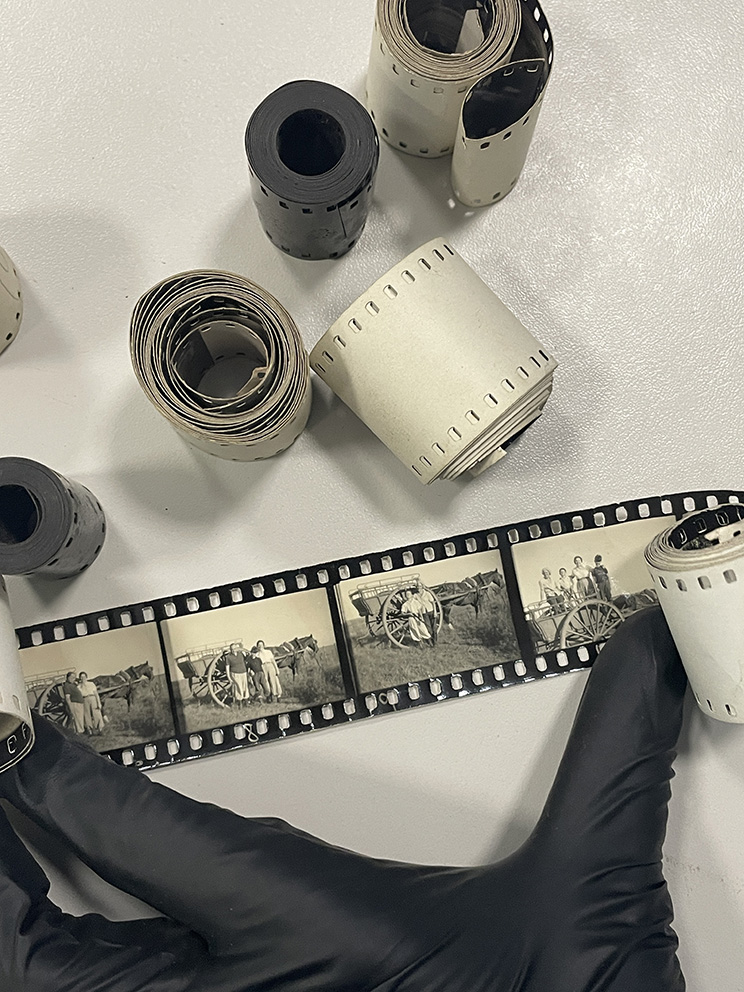
“As a result of this and other systematic surveys conducted over five decades,” Verónica Tell continues, “Priamo has generated a wealth of written materials such as inventories, reports, articles, books, unpublished texts, correspondence, and so on.” as well as iconographic material consisting of photographic reproductions [negatives and prints] from thousands of negatives and photographic prints belonging to public collections held in different regions of the country, many of which are currently inaccessible or at risk.
Acknowledgments: Osvaldo Betti; Andrea Cuarterolo; Francisco Ortíz; Noelia Perales; Héctor Luis Pezzimenti; Luis Priamo; Roberto Vega Andersen; and Verónica Tell.
* Special for Hilario. Arts, Letters, Crafts