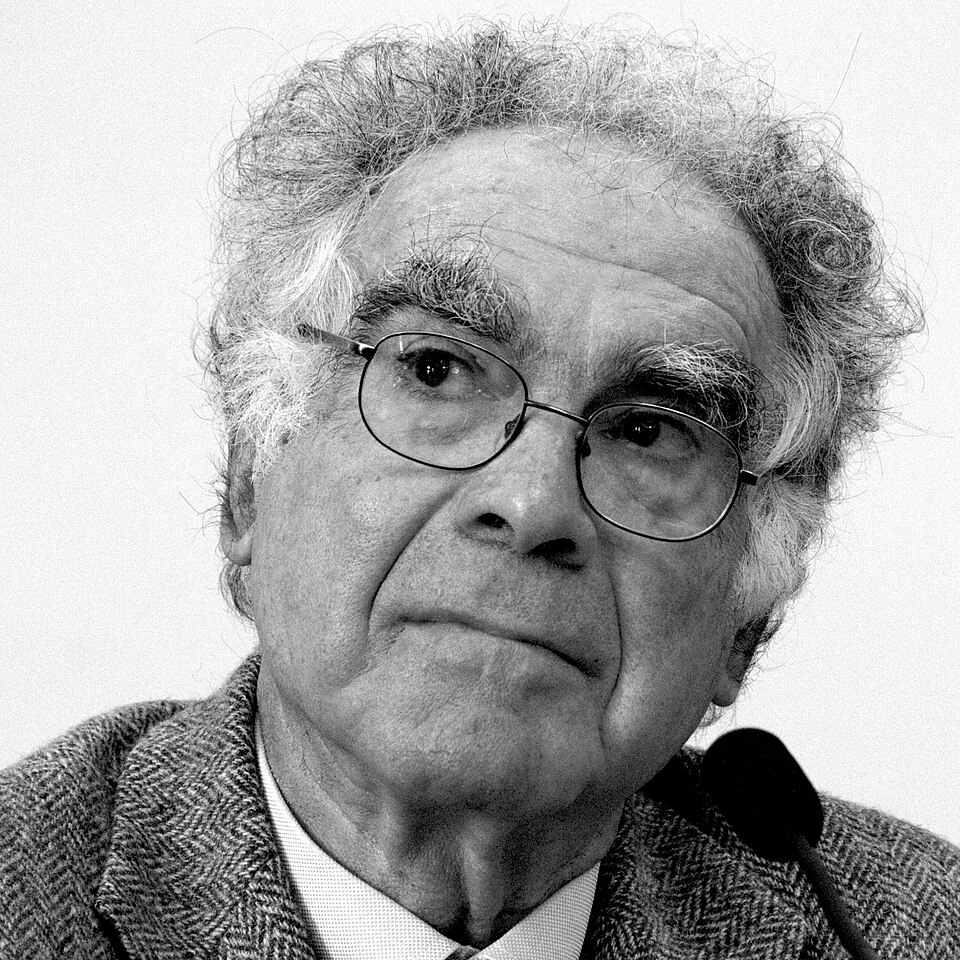
Carlo Ginzburg was born in Turin on April 15, 1939, son of two Italian intellectuals, Leone Ginzburg and Natalia Levi; the first, professor of Russian literature and Slavic literatures at the University of Turin, founder of the Einaudi publishing house together with Giulio Einaudi, member of the Italian section of the international anti-fascist movement Giustizia e Libertà, organized by Carlo Rosselli in Paris in 1929. Leone refused to take the oath of fidelity to the regime in 1934 and was expelled from the university. In 1940, he and his family were deported to Pizzoli, Abruzzo. They remained there until 1943. Leone returned to Rome after 8 September and remained there during the German occupation until he was arrested, tortured and murdered by the Nazis in February 1944.
Natalia Levi-Ginzburg was one of the greatest Italian novelists and essayists of the second half of the 20th century. Anyone who has read his memoir Lexico Familiar, the epistolary account of Dear Miguel, the stories of Sagittarius or The Voices of the Night, his 1988 plea to keep the crucifix hanging in primary schools in Italy, the essays and the poem "We Can't Know", will not be able to help but feel the emotional and regenerative power of literature. I have given these details because the Pizzoli episodes, the death of her father Leone, Natalia's devotion to her children in times of great tribulations have marked the life of our Carlo Ginzburg, fed his intelligence, strengthened his character, inspired his themes and imbued them with that feeling of Justice and Freedom for which Leone fought.
Carlo studied at the University of Pisa, then at the Normal School of the same city and, finally, at the Warburg Institute in London. In 1976, he began his academic career as a professor of Modern History at the University of Bologna, then taught at Harvard, Yale and Princeton and, in 1988, he was appointed professor at the University of California, Los Angeles until, from 2006 to 2010, he went on to teach at the Normal School where he had left. The list of tributes, awards and honorary doctorates that Professor Ginzburg has received is very long. Among his awards, I would like to remember the Balzan for the History of Europe (1400-1700), awarded in 2010 by the presidency of the Italian Republic and the Hemingway 2023, promoted by the comune of Lignano Sabbiadoro in Friuli-Venezia Giulia, shared with the Belgian writer Amélie Nothomb, the Italian photographer Marco Zanta and the Iranian lawyer Shirin Ebadi, Nobel Prize in 2003. Yes Ebadi was awarded as “Witness of our time”, Ginzburg was awarded for personifying the “Adventure of thought”. Transcribing the foundations of this award allows me to move on to the specific topics, to the extraordinary contributions that Carlo made to world historiography and to the theory of knowledge in the field of social sciences:
«[...] for having reconstructed, through numerous essays, the imagery and daily life of entire historical periods—starting from well-defined microcosms that, in some instances, include Friuli Venezia Giulia—and for tracing the voices of those who typically go unheard. His exploration of the relationships between historical truth, fiction, and falsehood is truly extraordinary; conducted with rare intelligence and profound ethical mastery, it reflects an awareness that discerning the truth—amidst the constant intertwining of imagination and reality in which we live—is the result of a journey of knowledge that not only defines the historian’s craft but also constitutes the very fabric of our existence in the world.»
Here, two starting points emerge for approaching this scholar’s historiographical journey—necessarily partial and brief given the vastness of Carlo Ginzburg’s body of work, yet representing two pillars that the public and many contemporary historians alike consider fundamental:
1] The creation of the genre of microhistory, alongside Edoardo Grendi and Giovanni Levi.
2] The reformulation of the *evidential paradigm* (or "clue-based method"): a practice with origins dating back to the era of hunters, trackers, and midwives, which was systematized by 19th-century medical semioticians—beginning with Laennec—and which Carlo has adapted and applied to historical inquiry.

Carlo Ginzburg in his study.
Microhistory
What might be termed the canonical organization of a microhistorical study draws upon the *emic* and *etic* concepts proposed by linguist Kenneth Pike: a detailed account of events; a classification of the phenomenon according to the specific categories of the time and place where the events occurred [the *emic* perspective, that of the historical subjects themselves]; and an examination of antecedents and causes [the *etic* perspective, that of the researchers]. These elements lead us, step by step, to the temporal scale of economic, social, and cultural structures spanning two or three human generations and, ultimately, to the *longue durée* of centuries and eras.
The quintessential example of microhistory is *The Cheese and the Worms*, a book published by Ginzburg in 1976. It offers an analytical exploration of an individual’s story, contextualized across multiple dimensions: the socio-economic reality of the peasantry in northern Italy; the religious landscape of Italian dissidents and heretics (well-documented thanks to the work of Cantimori and Prosperi); the cultural context of books and reading in rural areas; the archaeological traces of ancestral beliefs; and the realm of the imagination regarding possible societies or utopias. The work centers on two moving episodes in the life of Domenico Scandella—known as Menocchio—a Friulian miller from the second half of the sixteenth century; his story represents one of the most spectacular archival discoveries of the twentieth century. It is inconceivable that the inhabitants of Montereale would not have known Menocchio, as everyone would have visited his mill to obtain flour from their harvested grain. Menocchio would seize the opportunity to question his fellow townsmen and talk at length—often incessantly—about land cultivation and ownership, the relationships between lords and farmers, and the worlds both real (as described by travelers) and fantastic (known to high and low alike) that ranged from age-old tales of the Land of Cockaigne to accounts found in books like *The Travels of John Mandeville* or Anton Francesco Doni’s *Mondi*—works containing theories on the nature of the Earth, divine creation, and the organization of society.
Menocchio was not only literate but also owned a small library—perhaps tiny by 19th- or 20th-century standards, yet by no means small for the time, even among the well-to-do bourgeoisie of the 16th century. The titles in his collection were remarkable for a peasant’s home: a Bible in the vernacular, a biblical anthology, a rosary book dedicated to the Virgin Mary, an Italian version of *The Golden Legend*, a copy of Mandeville, a volume of Caravia’s *Il Sogno*, the chronicles of the Bergamasque hermit Jacopo Foresti, an astrological almanac, the *Decameron*, and—possibly—the Italian translation of the Quran published in Venice in 1547. It appears that many of his acquaintances in the village denounced him for what they deemed to be outlandish and heretical ideas. The inquisitors seized the books from his home and subjected Menocchio to lengthy interrogations; he placed no restraint on his loquacity, expounding at length on a form of monism involving divine self-creation out of chaos—an ancient belief within peasant thought—and uttered the very phrase that gave rise to the title of Ginzburg’s book:
"From the world's most perfect substance, the angels were produced by nature—much like worms forming in cheese—yet upon their creation, they received will, intellect, and memory from God, who blessed them."
Menocchio repented, abjured his cosmogony, and was sentenced to severe penalties involving silence and the wearing of stigmatizing garments. He managed to save his life for a time. However, the miller could not suppress his nature and returned to his theological-philosophical verbosity. A second trial ensued, involving torture and a death sentence. As chance would have it, Menocchio’s end coincided closely with the trial and execution of another monist—one of far higher standing than the miller: the Dominican friar and heretic Giordano Bruno, who was burned at the stake in Rome in February 1600. Thus, the realm of high theology and lofty thought found an extraordinary point of intersection with the realm of peasant reasoning and independent belief in late sixteenth-century Italy. The microhistory of a somewhat bizarre—and ultimately tragic—episode, in which a figure from "history from below" (or what we might today call "Subaltern Studies," following in the footsteps of Antonio Gramsci and Ranajit Guha) appears almost as an *alter ego* of the philosopher Giordano Bruno—that hero of free thought, so towering and bold for our immediate intellectual forebears of the 1880–1940 period (I am thinking of Rodolfo Mondolfo)—has linked us to the grand history of European philosophy. Thus, the trajectory of Italian microhistory is fulfilled.
The Evidentiary Paradigm
It is hardly surprising that Ginzburg crowned this period of his work by proposing a paradigm for the human sciences—for the exercise of reason within history. In a collection of essays assembled by Aldo Gargani in 1979—*The Crisis of Reason: New Models in the Relationship Between Knowledge and Human Activity*—our author presented an outline of his ideas on the subject. He began with an inquiry that embraced methods seemingly far removed from one another: those of the art attribution expert [Morelli], the detective novel [Conan Doyle], and psychoanalysis [Freud]. In doing so, he demonstrated the fruitfulness of studying the singular—focusing on the minute clues that the successive abstractions of Galilean reason had discarded. Paradoxically, the modern state seems to have grasped the potential of this method—based on small, involuntary signals—even before the social sciences did, harnessing it to serve its own abstract, totalizing power. The result has been the invention of identification systems and oppressive mechanisms for monitoring or surveilling individuals. Yet, by bringing the evidentiary paradigm to light—and by revealing its antiquity and universality (it is, I repeat, the paradigm of the African hunter, the Pampas scout, the loess farmer, and the village matron or midwife)—Ginzburg has reclaimed it for us historians. He has transformed it into a rational tool that allows us to recover the meanings and the manifold relationships of action and dreaming through which individuals in society sought to construct their lives. What has been said so far is sufficient to accept the validity of the view that microhistory and the *morelli* (or "evidential") method are two crucial elements—enough in themselves to place Carlo Ginzburg in the pantheon of the greatest historians of our time—yet this perspective, while clear, is vastly insufficient.
I will limit myself to outlining the fields where Ginzburg has left his mark and established turning points that are equivalent to, or even more rich in meaning than, those considered thus far:
1) The history of art and literature, both within the framework of microhistory and beyond it.
2) A prescient—and perhaps unintended—anticipation of global history.
3) The history of philosophical and theological themes that have served as the *basso continuo* of Western thought—explored both within and outside the realm of microhistory. I refer here to the chain of readings and appropriations surrounding a dense, significant passage—or several interconnected passages—drawn from secular and religious theories, originally formulated by singular minds regarding fundamental cultural issues.
I shall focus only on the first of these, as it is likely to be of greatest interest to the readers of *Hilario*.
The history of art and literature, both within the framework of microhistory and beyond it. I do not exaggerate when I say that our ideas regarding the relationships between artistic centers and peripheries—particularly in Latin America—can be viewed as extrapolations of the framework presented by Enrico Castelnuovo and Carlo Ginzburg. They developed this model while examining the artistic ties linking Florence, Venice, and Rome to their respective Italian peripheries during the Renaissance—a study they undertook for the volume on the issues and methods of Italian art history published by Einaudi in 1979. Those two disciplines closely related to our own—concerned with the evolution of art and letters—would not be what they are today without this historian's contribution, even though Carlo sought to limit his involvement to the realm of the figurative arts—for instance, right from the start of his 1981 study on Piero, when he wrote:
"I do not discuss the strictly formal aspects of these paintings because I lack the necessary expertise [I am a scholar of history, not of art history]. This is a serious limitation."
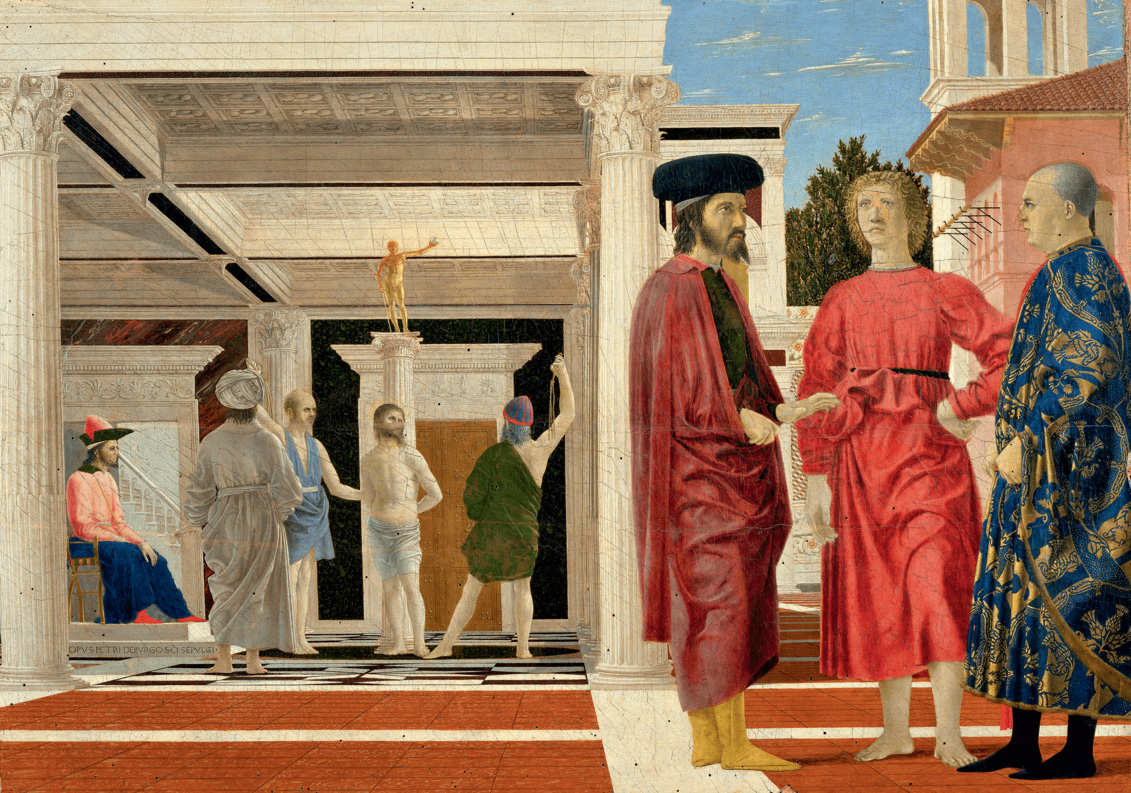
I understand Ginzburg’s caution in dealing with a towering figure in art historiography like Roberto Longhi; yet, in light of the iconographic findings presented in his study on Piero della Francesca’s *Flagellation*, we must immediately place our author within the constellation of historians who are heirs to Warburg and closely aligned with Ernst Gombrich—specifically, the Gombrich who appears most fully as a historian in the volume *Icones Symbolicae*. Let us recall that in 1966, in *Studi medievali*, Carlo published "From Aby Warburg to Ernst Gombrich: Notes on a Methodological Problem"—an essay that remains not only essential but also refreshing today, despite the mountain of scholarship generated by the revival of interest in Aby Warburg. In any case, since the publication of his inquiry into Piero, hardly a book of his has appeared without chapters dedicated to painting, printmaking, or sculpture—several of which have become classics of art historiography, such as:
- "High and Low" (*Lo alto y lo bajo*), concerning the theme of forbidden knowledge in 16th- and 17th-century emblems, as well as Titian’s illustrated poems and his engravings for 16th-century editions of Ovid’s *Metamorphoses*, found in the famous book *Myths, Emblems, Clues: Morphology and History*.
- The three essays contained in *Wooden Eyes* (1998), including the one regarding the origins of Christian cult images in the depiction of apparitions found in Hebrew prophetic literature; —the one concerning Origen’s distinction between idol and image—a passage from which Christian iconism ultimately emerged; and the one dealing with the history of the concept of style—spanning from Cicero, Castiglione, and Vasari on the one hand, to Simone Weil, Theodor Adorno, and Roberto Longhi on the other—a text that could serve as a model for conceptual history applied to aesthetics.
—In the final chapter of *Relaciones de fuerza: Historia, retórica, prueba* (Relations of Force: History, Rhetoric, Proof), published by Ginzburg in 2001, he presents a radically new approach to the origins of Cubism—linking it to the exoticism fueled by early 20th-century anthropology—and connects the Picasso of that period to Aby Warburg’s work on *Pathosformel*. The category of "pathos formulas" has prompted a search for its conceptual sources, specifically regarding Warburg’s interpretation of German linguist Hermann Osthoff’s theories on the primitive characteristics of the superlative in language; to this, one must add the art historian’s enthusiasm for Charles Darwin’s book *The Expression of the Emotions in Man and Animals*. Carlo also identified, within the use of that methodological tool, an addition by Gertrud Bing that introduced an "acronological"—that is, non-historical—component into the *Pathosformel*, a feature foreign to Warburg’s own conception. This essay on the quintessential Warburgian concept—"Warburg’s Scissors"—was published in 2013 in the collection of articles *Tre figure* (Three Figures), which focused on the figures of the dead Achilles, Meleager, and Christ, and also featured contributions from María Luisa Catoni, Luca Giuliani, and Salvatore Settis. There, Carlo made some measured adjustments to a few points—adjustments I would have liked to make myself:
"The Mnemosyne enterprise remains difficult to decipher, despite the fatuous and complacent attempt to tame it by aligning it with current trends. But trends pass. Warburg’s work will outlast even trends."
Between 2013 and 2015, Ginzburg published *Fear, Reverence, Terror: Five Essays in Political Iconography*. This work is dedicated to deciphering the meanings behind a relief depicting the seemingly savage humanity Europeans encountered during their overseas voyages, as well as the political significance of the frontispiece to Hobbes’s *Leviathan*, the striking portrait of the assassinated Marat in his bathtub, recruitment posters from the First World War and the Russian Revolution, and, finally, a fresh reading of Picasso’s *Guernica*. Few books deserve a place in the same constellation as Warburg’s *The Renewal of Pagan Antiquity*, Panofsky’s *Studies in Iconology*, Edgar Wind’s *Pagan Mysteries in the Renaissance*, and Gombrich’s *Icones Symbolicae* more than this one. I believe I have demonstrated that our Carlo is one of the most significant art historians of our time.
Regarding the history of literature, it suffices to mention two things. The first is the opening essay of *Ojazos de madera* concerning the evolution of "defamiliarization"—from Marcus Aurelius to Marcel Proust—that literary device identified by the Russian formalist Viktor Shklovsky, intended to reawaken our perceptions, which have been dulled by the repetition of our habits. The second concerns "four views of English literature from a global perspective"—four Panizzi Lectures (an annual series of talks on the history of the book and bibliography held at the British Library in London) published in 2000 under the title *No Island Is an Island*. These lectures interweave: a) More’s *Utopia* with contemporary European humanism and 16th-century Spanish travel literature; b) Elizabethan debates on the excellence of English-language poetry with the Latin tradition and the culmination of the defense of the English poetic mode in Samuel Daniel’s *A Defence of Ryme* (1603); c) Lawrence Sterne’s narrative experiments in *Tristram Shandy* with 17th-century philosophical empiricism; and d) the reading of the later Stevenson—specifically his letters and likely *The Bottle Imp*—by the anthropologist Bronislaw Malinowski, a reading that may well have sparked, in the Polish researcher’s scientific imagination, the very idea of the *kula*: that ghostly institution involving the exchange of items of great value to the participants yet devoid of any practical utility. The shadow of Borges looms over these four studies, highlighting the endless web of references linking one text to another across the literary horizon—a literature transformed into a radical experience of reality.
In short, I would say that Ginzburg’s principal lesson for historians has a Dantean root. It could be summarized in line 100 of Canto XXVI of *Inferno*—*misi me per l’alto mare aperto* ("I committed myself to the deep, open sea")—a phrase Dante placed in the mouth of Ulysses as he recounted the story of his final voyage into the unknown. Some Dante scholars have linked this episode to the theme of *sapere non aude* (the refusal to dare to know). Let us not forget that a study by Carlo has addressed the issue of forbidden knowledge and emblems. It is perhaps worth asking, then, whether Ulysses’s guilt has shifted from the fraud of the Trojan Horse toward the pride of daring to know. Borges believed this to be the case, yet he also cast Dante himself as an alter ego of Ulysses—one who dared to compose his poem as a testament to his journey and to the truth of punishment, repentance, and glory in the realm of the dead. Through the example of his work, Carlo Ginzburg urges us to venture into the open sea of the past—with all its perils and opportunities for heroism—as we strive to demonstrate, through history as reflection, that history as action is neither a tale told by a madman nor a nightmare from which we cannot wake.
Bibliography of Carlo Ginzburg
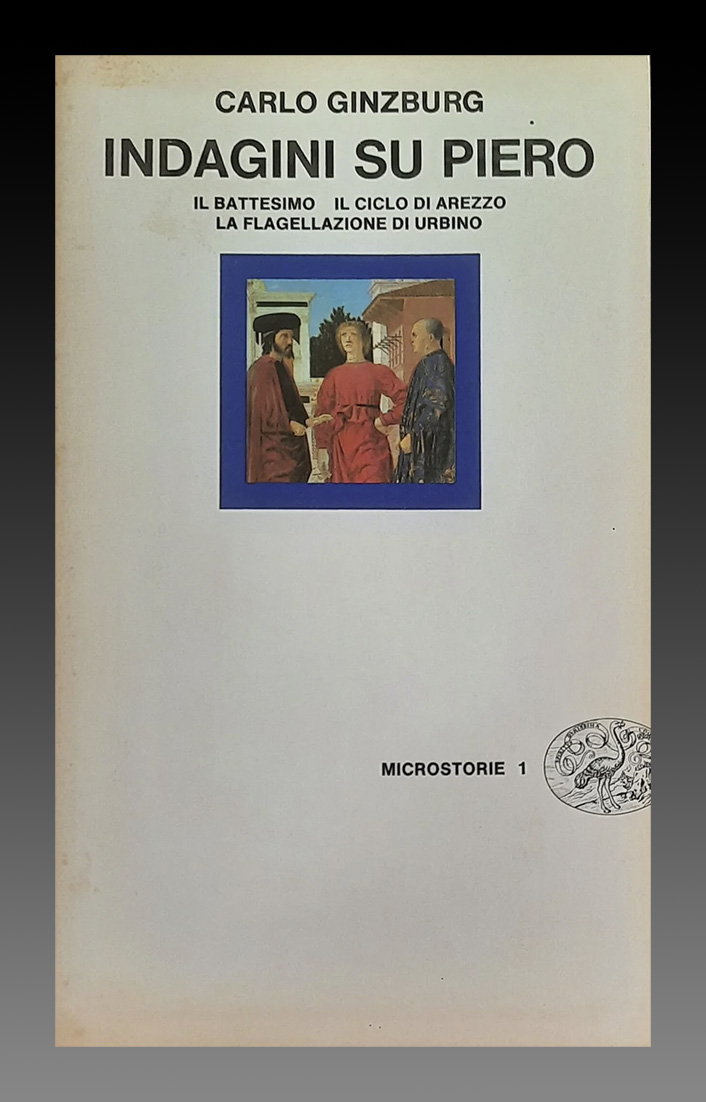
∙∙ [1981]. Indagini su Piero, Turin, Einaudi [Spanish trans.: Pesquisa sobre Piero, Buenos Aires, Muchnik Editores, 1984].
∙∙ [1996], Jean Fouquet. Ritratto del buffone Gonella, Modena, Franco Cosimo Panini.
∙∙ [1998], Occhiacci di legno, Milan, Feltrinelli [Spanish trans.: Ojazos de madera. Nueve reflexiones sobre la distancia, Ediciones Península, 2018].
∙∙ [2000], No Island is an Island. Four Glances at English Literature in a World Perspective, New York, Columbia University Press [Spanish trans.: Ninguna isla es una isla. Cuatro miradas sobre la literatura inglesa, Buenos Aires, Prometeo, 2021].
∙∙ [2001], Rapporti di forza. Storia retorica prova, Milan, Feltrinelli [Spanish trans.: Relaciones de fuerza. Historia, retórica, prueba, Mexico, Contrahistorias, 2018].
∙∙ [2003], Tentativas, trans. by Ventura Aguirre Durán, Morelia-Michoacán-Mexico, Universidad Michoacana de San Nicolás de Hidalgo, Faculty of History.
∙∙ [2006], Il filo e le tracce. Vero falso finto, Milan, Feltrinelli [Spanish trans.: El hilo y las huellas. Lo verdadero, lo falso, lo ficticio, Buenos Aires, Fondo de Cultura Económica, 2010]
∙∙ [2010] 2010 Balzan Prize for European History [1400-1700], Milan, Balzan Prize 2010.
∙∙ [2013], “Le forbici di Warburg”, in Catoni, Maria Luisa, Carlo Ginzburg, Luca Giuliani, and Salvatore Settis, Tre figure, Achille, Meleagro, Cristo, Milan, Feltrinelli, pp. 109-132.
∙∙ [2015], Paura reverenza terrore. Cinque saggi di iconografía política, Milan, Adelphi [Spanish trans.: Miedo, reverencia, terror. Cinco ensayos de iconografía política, Rosario, Editorial Prohistoria, 2018].
∙∙ [2016], Cinco reflexiones sobre Marc Bloch, trans. by Carlos Antonio Aguirre Rojas, Bogotá, 2016.
∙∙ Ginzburg, C. [2017], (1989), Storia notturna. Una decifrazione del sabba, Milan, Adelphi [Spanish trans.: Historia nocturna. Las raíces antropológicas del relato, Barcelona, Ediciones Península, 2003].
∙∙ [2018], Nondimanco. Machiavelli, Pascal, Milan, Adelphi.
∙∙ [2019], [1976]), Il formaggio e i vermi. Il cosmo di un mugnaio del 500, Milan, Adelphi [Spanish trans.: El queso y los gusanos. El cosmos según un molinero del siglo xvi, Ediciones Península, 2016].
∙∙ [2020] (1966), I benandanti. Stregoneria e culti agrari tra ‘500 e 600, Milan, Adelphi [Spanish trans.: Los benandanti. Brujería y cultos agrarios entre los siglos XVI y XVII, Mexico, Editorial Universidad de Guadalajara, 2005].
∙∙ [2021], En el taller de Dante. Cuatro ensayos, trans. by Raúl Rodríguez Freire, Adrogué, La Cebra; Santiago de Chile, Palinodia.
∙∙ [2021], Aún aprendo. Cuatro ensayos de filología retrospectiva, trans. by Rafael Gaune Corradi, Buenos Aires, Fondo de Cultura Económica.
∙∙ [2021], La lettera uccide, Milan, Adelphi [Spanish trans.: La letra mata, translation, edition, and notes by Rafael Gaune Corradi, Buenos Aires, Fondo de Cultura Económica, 2024].
∙∙ [2023] (1986) Miti emblemi spie. Morfologia e storia. Nuova edizione, Milan, Adelphi [Spanish trans.: Mitos, emblemas, indicios. Morfología e historia, Mexico, Gedisa, 2008].